The Hate Review
Cyprus
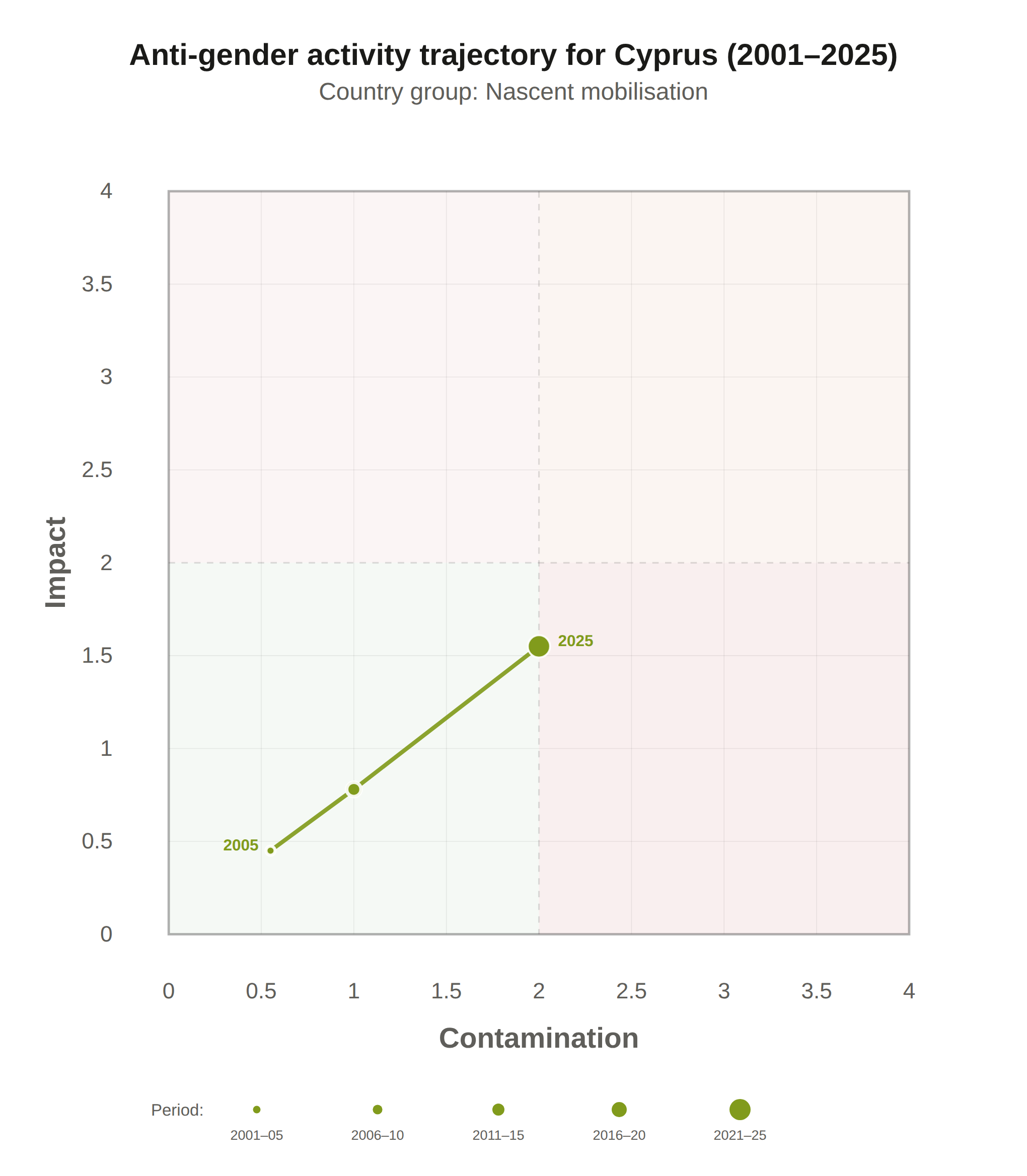
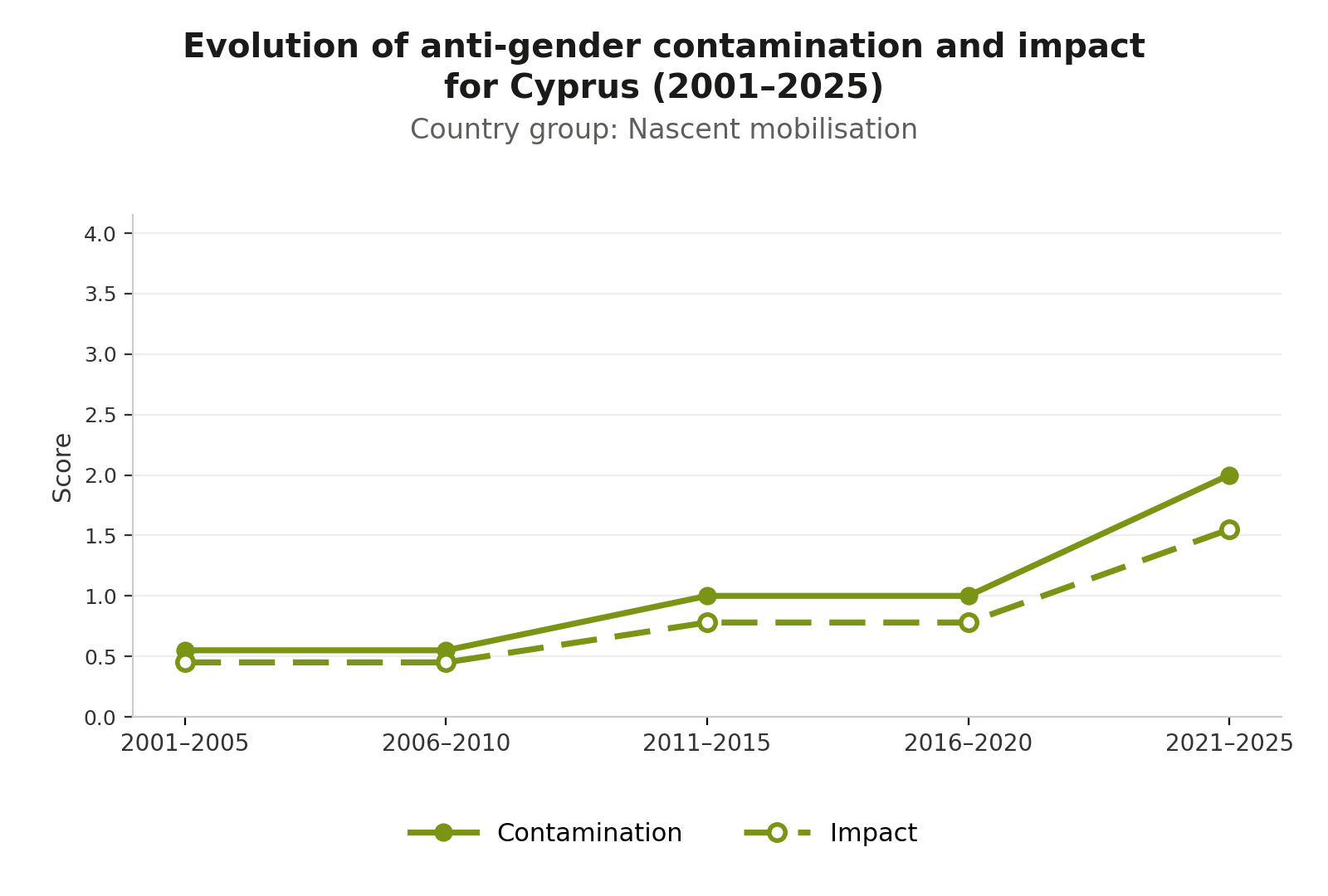
Key indicators in 2025: Contamination 2.00 / 4 · Impact 1.55 / 4
Over the past twenty-five years, anti-gender activity in Cyprus has evolved from Church-led moral condemnation at the margins of politics to a more diffuse but growing ecosystem. Pressure linked to EU accession drove progressive legal reforms despite Church opposition, establishing a pattern of reactive conservatism. ELAM’s entry into parliament in 2016 marked the shift from purely religious to institutionalised political opposition. The 2022–2023 sex education controversy was the first moment where anti-gender mobilisation extended beyond Church statements and parliamentary votes to street protest, social media disinformation and organised parent groups, signalling a gradual alignment with mobilisation patterns seen elsewhere in Europe. The movement remains fragmented and lacks an extended infrastructure, but the trajectory is one of slow consolidation.
| Year | Abortion & Reproductive Rights | Sex & Relationship Education | LGBTIQ+ Visibility | Partnerships, Marriage & Family | Legal Gender Recognition & Healthcare | Istanbul Convention | Language & Gender Studies | Civil Society & Democratic Space |
|---|---|---|---|---|---|---|---|---|
| 1990s |
A |
|||||||
| 2000 | ||||||||
| 2001 | ||||||||
| 2002 | ||||||||
| 2003 | ||||||||
| 2004 | ||||||||
| 2005 | ||||||||
| 2006 | ||||||||
| 2007 | ||||||||
| 2008 | ||||||||
| 2009 | ||||||||
| 2010 | ||||||||
| 2011 | ||||||||
| 2012 | ||||||||
| 2013 | ||||||||
| 2014 |
M |
|||||||
| 2015 |
OA |
|||||||
| 2016 |
A |
|||||||
| 2017 | ||||||||
| 2018 |
O |
A |
||||||
| 2019 |
AD |
|||||||
| 2020 | ||||||||
| 2021 | ||||||||
| 2022 |
OD |
O |
||||||
| 2023 |
MA |
OMA |
O |
|||||
| 2024 |
PM |
OM |
||||||
| 2025 |
M |
P |
||||||
| 2026 |
M |
| OOpposition to progressive law or regulation/policy | PProposal or implementation of anti-gender law or regulation/policy | LStrategic litigation |
| MProtest or demonstration | IPetition or citizen initiative | AAdvocacy campaign |
| DDisinformation campaign | TTransnational interference |
The evolution of the anti-gender movement in Cyprus