The Hate Review
Georgia
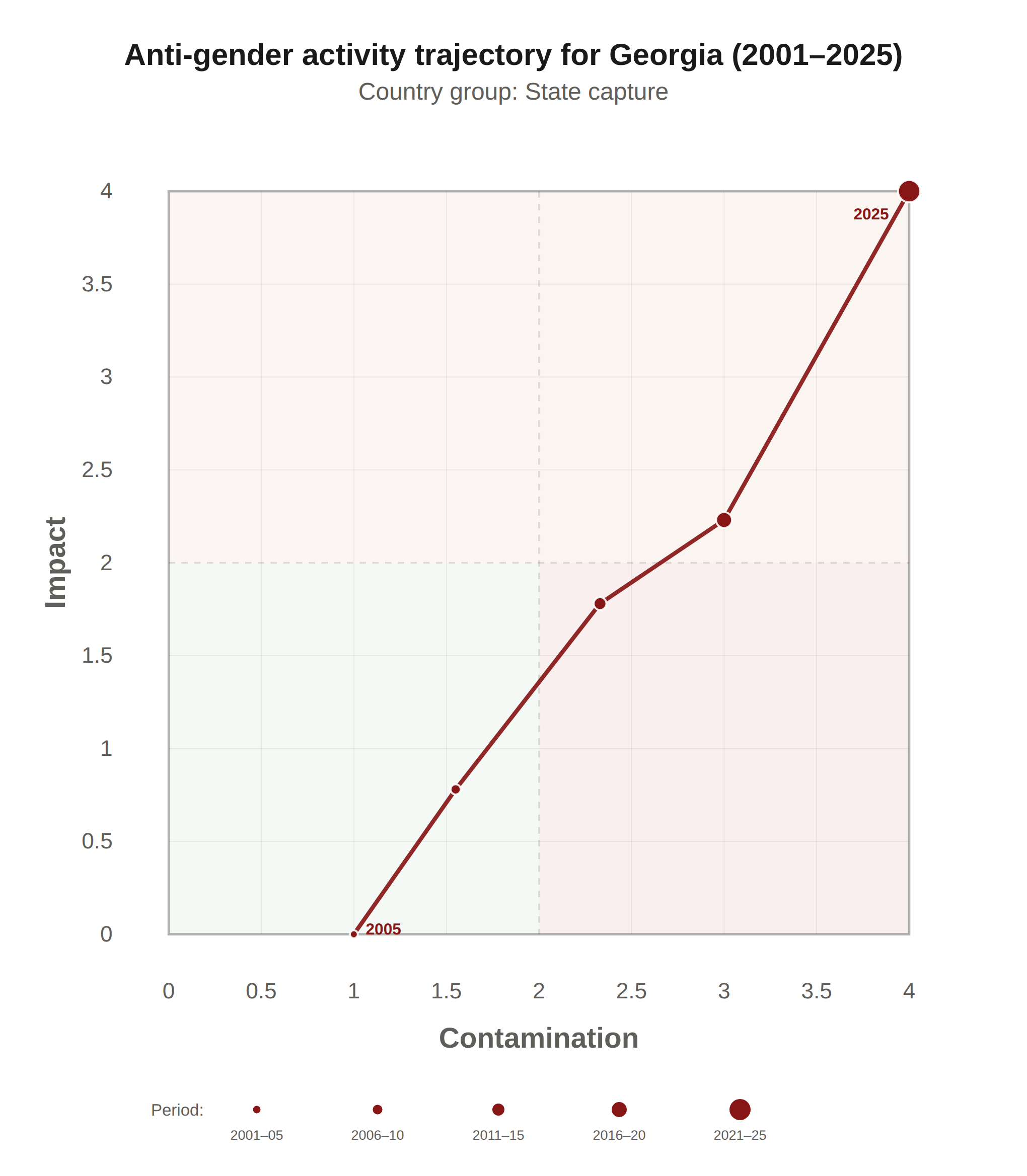
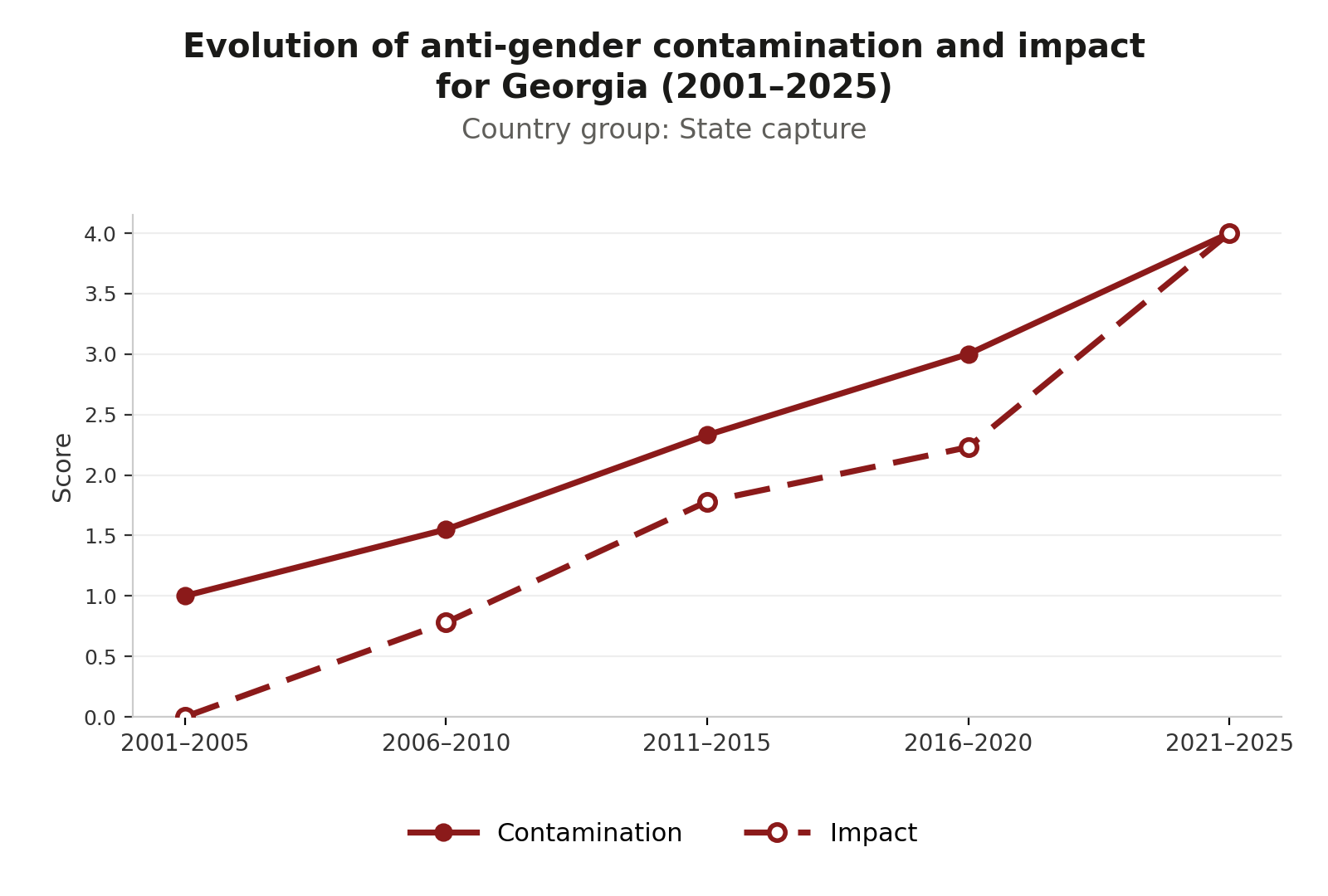
Key indicators in 2025: Contamination 4.00 / 4 · Impact 4.00 / 4
Anti-gender mobilisation in Georgia has been driven by a distinctive combination of the Georgian Orthodox Church, far-right movements with documented Russian links, and ultimately the ruling Georgian Dream party, which progressively absorbed and institutionalised the anti-gender agenda as a central electoral and ideological pillar. The movement evolved from Church-led moral condemnation and organised street violence against LGBTIQ+ public events through the 2010s, to full state capture of the anti-gender agenda by 2024. Georgia adopted that year one of the most sweeping “anti-LGBT propaganda” laws in Europe, banning any “popularisation” of same-sex relationships or non-heterosexual gender identity in schools, media, public gatherings and workplaces. Civil society organisations working on gender equality and the rights of LGBTIQ+ people now operate under direct criminal exposure, with leading organisations’ bank accounts frozen and independent civic space rapidly shrinking.
| Year | Abortion & Reproductive Rights | Sex & Relationship Education | LGBTIQ+ Visibility | Partnerships, Marriage & Family | Legal Gender Recognition & Healthcare | Istanbul Convention | Language & Gender Studies | Civil Society & Democratic Space |
|---|---|---|---|---|---|---|---|---|
| 1990s | ||||||||
| 2000 | ||||||||
| 2001 | ||||||||
| 2002 | ||||||||
| 2003 | ||||||||
| 2004 | ||||||||
| 2005 | ||||||||
| 2006 | ||||||||
| 2007 | ||||||||
| 2008 | ||||||||
| 2009 | ||||||||
| 2010 | ||||||||
| 2011 | ||||||||
| 2012 |
M |
|||||||
| 2013 |
M |
|||||||
| 2014 |
OMA |
|||||||
| 2015 |
M |
|||||||
| 2016 |
M |
I |
||||||
| 2017 |
M |
P |
||||||
| 2018 |
M |
|||||||
| 2019 |
PMDT |
|||||||
| 2020 |
PT |
M |
||||||
| 2021 |
M |
|||||||
| 2022 |
M |
|||||||
| 2023 |
MD |
|||||||
| 2024 |
P |
PMA |
P |
P |
P |
|||
| 2025 |
M |
P |
PL |
|||||
| 2026 |
M |
P |
| OOpposition to progressive law or regulation/policy | PProposal or implementation of anti-gender law or regulation/policy | LStrategic litigation |
| MProtest or demonstration | IPetition or citizen initiative | AAdvocacy campaign |
| DDisinformation campaign | TTransnational interference |
The evolution of the anti-gender movement in Georgia