The Hate Review
Iceland
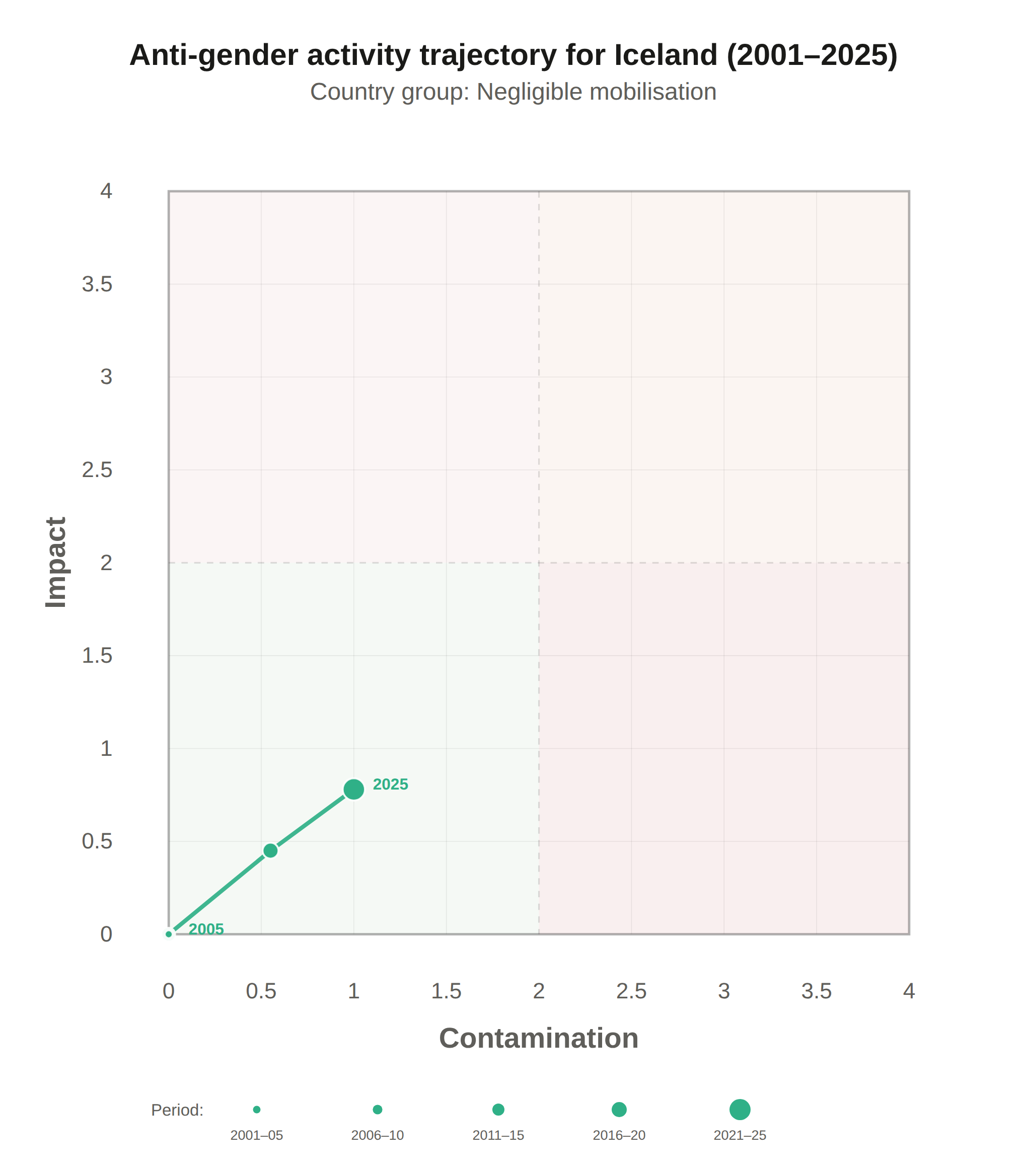
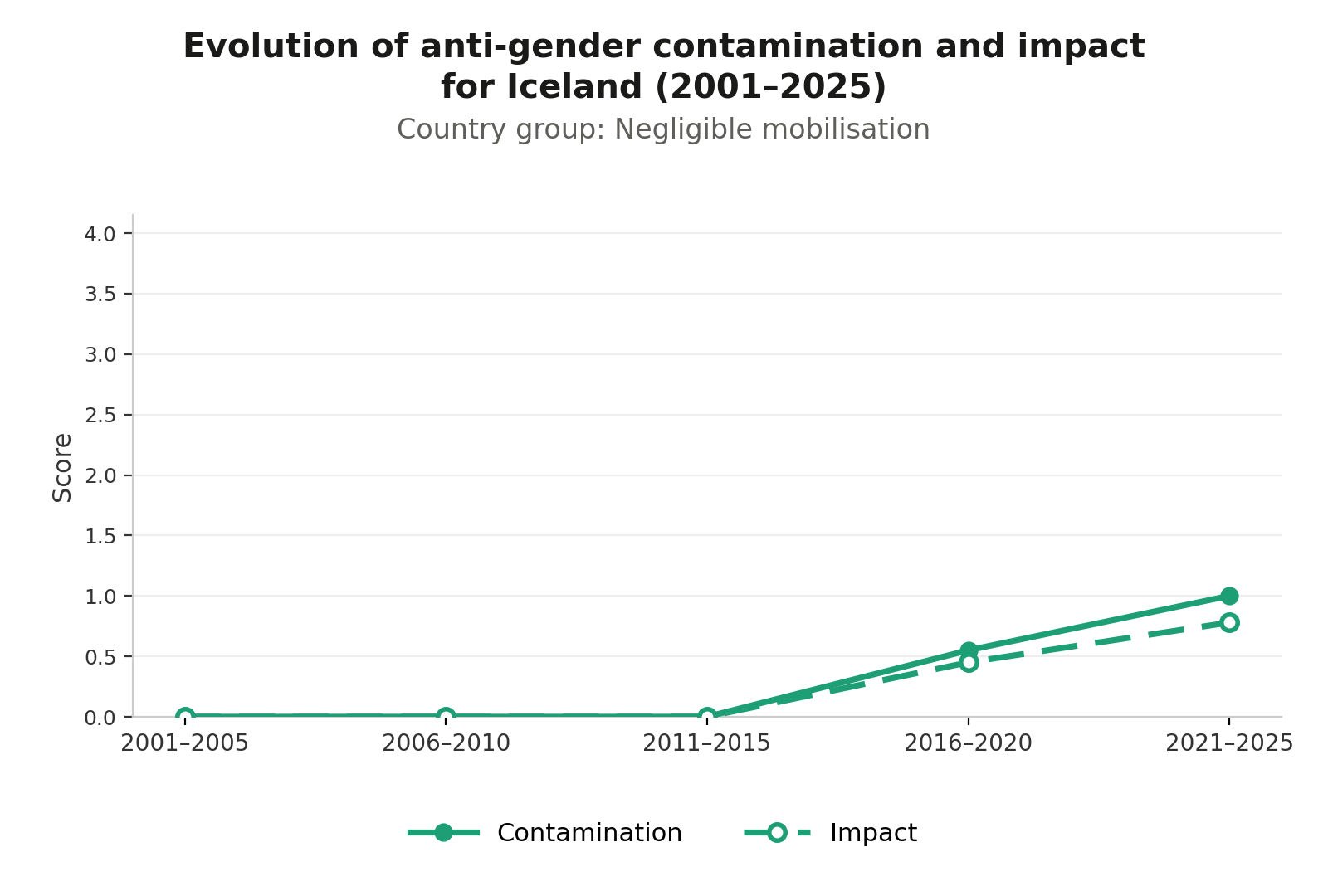
Key indicators in 2025: Contamination 1.00 / 4 · Impact 0.78 / 4
Anti-gender activity in Iceland remains weak, fragmented and largely confined to a small number of actors without significant public support. Its dominant vehicle is parliamentary — the Centre Party of former Prime Minister Sigmundur Davíð Gunnlaugsson — while the civil society dimension has only recently begun to take shape through organisations such as LGB Samtökin and the newly formed Drenglyndi parent group. Mobilisation has taken the form of isolated individual interventions rather than coordinated campaigns or mass movements, with LGBTIQ+ education in schools emerging as the consistent target. Despite the strength of its legal framework and the breadth of public consensus on the rights of LGBTIQ+ people, Iceland shows that no country is immune to the anti-gender dynamics reshaping debate across Europe.
| Year | Abortion & Reproductive Rights | Sex & Relationship Education | LGBTIQ+ Visibility | Partnerships, Marriage & Family | Legal Gender Recognition & Healthcare | Istanbul Convention | Language & Gender Studies | Civil Society & Democratic Space |
|---|---|---|---|---|---|---|---|---|
| 1990s | ||||||||
| 2000 | ||||||||
| 2001 | ||||||||
| 2002 | ||||||||
| 2003 | ||||||||
| 2004 | ||||||||
| 2005 | ||||||||
| 2006 | ||||||||
| 2007 | ||||||||
| 2008 | ||||||||
| 2009 | ||||||||
| 2010 | ||||||||
| 2011 | ||||||||
| 2012 | ||||||||
| 2013 | ||||||||
| 2014 | ||||||||
| 2015 |
A |
|||||||
| 2016 | ||||||||
| 2017 | ||||||||
| 2018 | ||||||||
| 2019 |
O |
A |
O |
|||||
| 2020 |
O |
|||||||
| 2021 | ||||||||
| 2022 |
A |
|||||||
| 2023 |
A |
MA |
AT |
|||||
| 2024 |
A |
|||||||
| 2025 |
A |
|||||||
| 2026 |
IA |
A |
| OOpposition to progressive law or regulation/policy | PProposal or implementation of anti-gender law or regulation/policy | LStrategic litigation |
| MProtest or demonstration | IPetition or citizen initiative | AAdvocacy campaign |
| DDisinformation campaign | TTransnational interference |
The evolution of the anti-gender movement in Iceland