The Hate Review
Liechtenstein
Country Group: Structural state conservatism
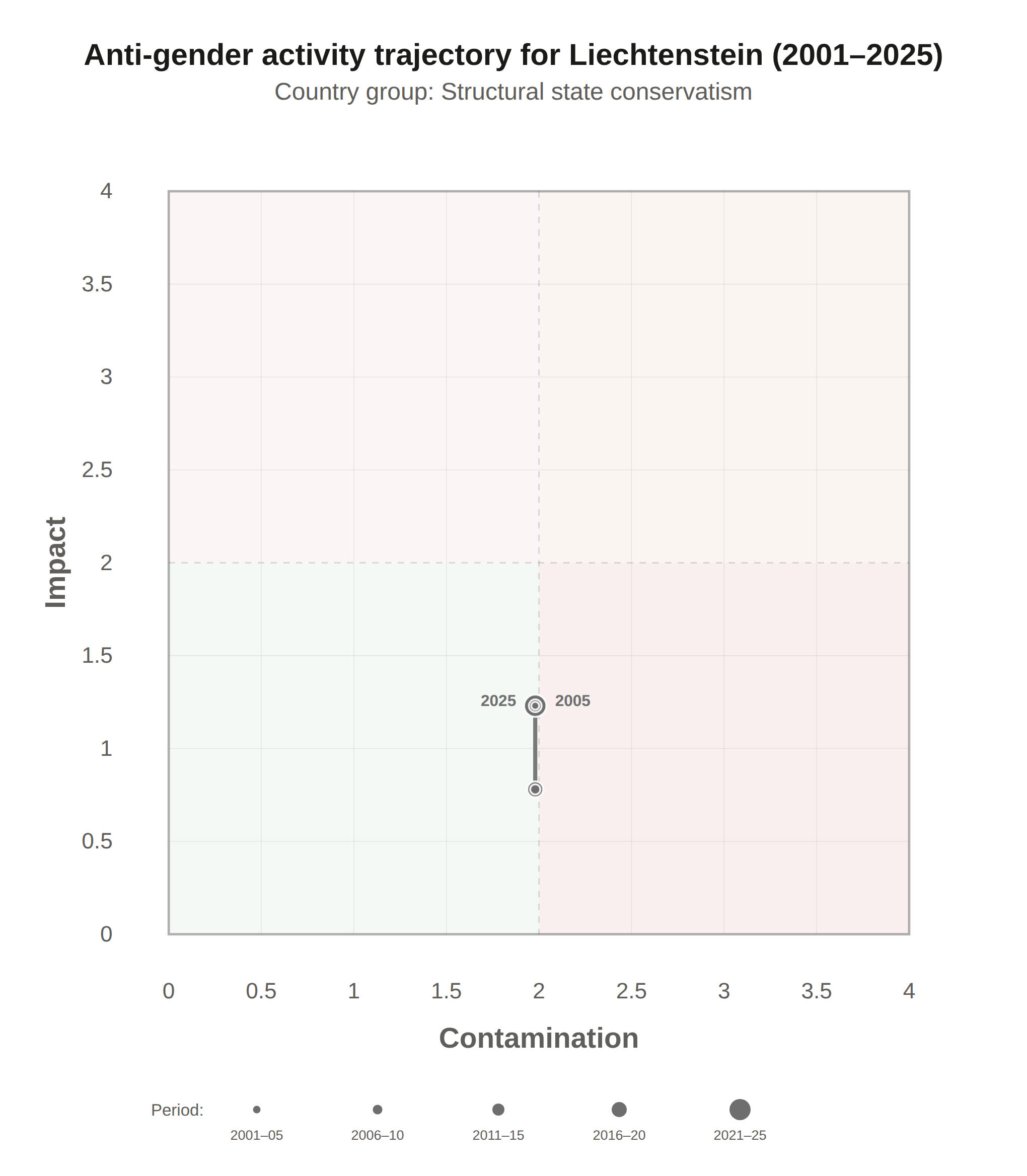
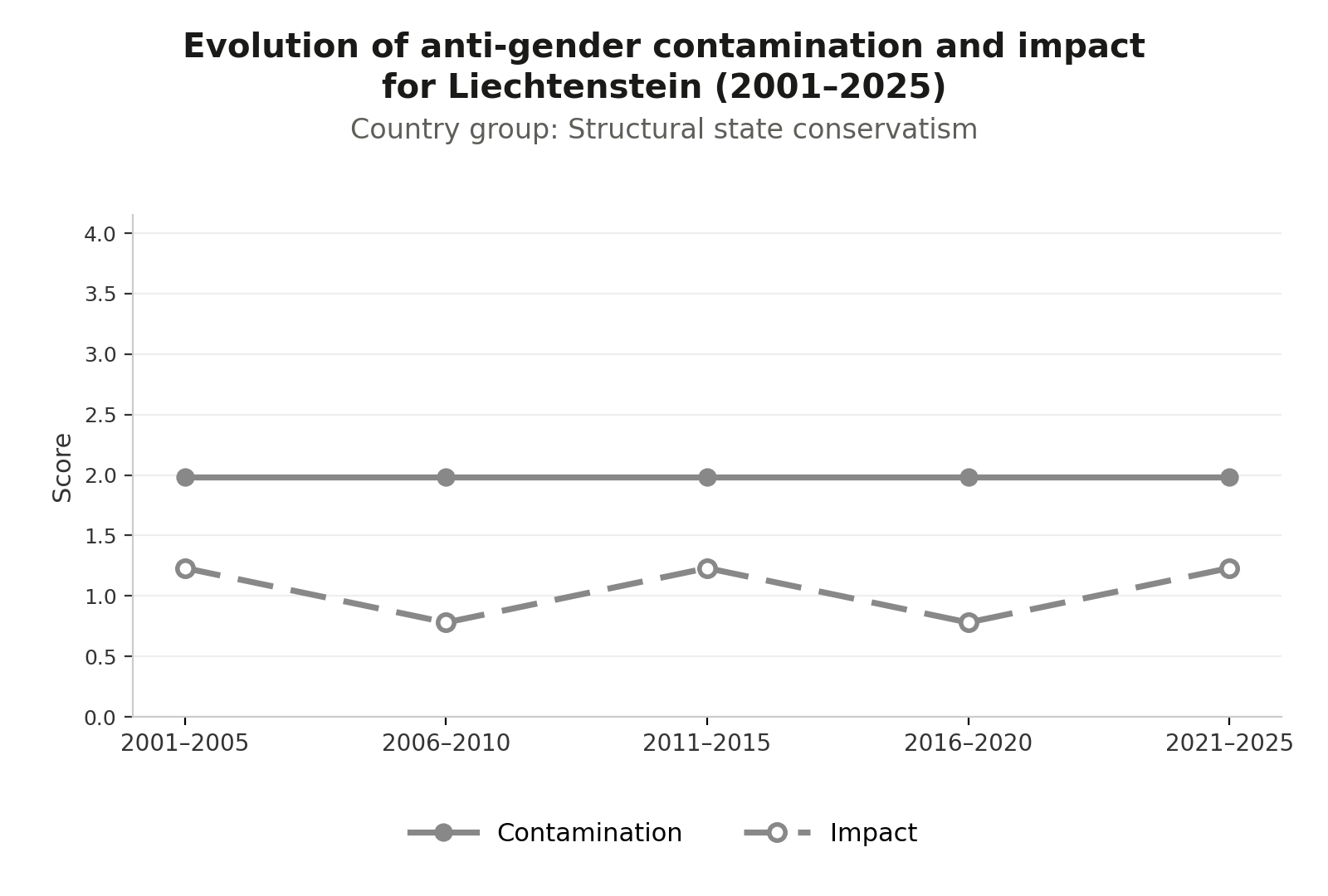
Key indicators in 2025: Contamination 1.98 / 4 · Impact 1.23 / 4
The dominant anti-gender actors in Liechtenstein have not been political parties or civil society organisations but institutions: the Princely House and the Catholic Church. Under Archbishop Wolfgang Haas, who led the Archdiocese of Vaduz from 1997 until 2023, the Church intervened consistently and forcefully against every major progressive reform. The Princely House has wielded its constitutional veto power to block or constrain liberalisation, most decisively on abortion. Beyond its domestic role, the Princely family is structurally embedded in the transnational anti-gender movement, sitting on the boards of influential international anti-gender advocacy organisations while funding anti-abortion initiatives. Despite its small size, Liechtenstein is therefore not merely a passive context for anti-gender activity but a node — through its ruling family — in a well-resourced international network whose influence extends far beyond the principality’s borders.
| Year | Abortion & Reproductive Rights |
Sex & Relationship Education |
LGBTIQ+ Visibility |
Partnerships, Marriage & Family |
Legal Gender Recognition & Healthcare |
Istanbul Convention |
Language & Gender Studies |
Civil Society & Democratic Space |
|---|---|---|---|---|---|---|---|---|
| 1990s | ||||||||
| 2000 | ||||||||
| 2001 | ||||||||
| 2002 | ||||||||
| 2003 | ||||||||
| 2004 | ||||||||
| 2005 | PA | |||||||
| 2006 | ||||||||
| 2007 | A | |||||||
| 2008 | ||||||||
| 2009 | ||||||||
| 2010 | A | |||||||
| 2011 | OA | OPIA | ||||||
| 2012 | ||||||||
| 2013 | ||||||||
| 2014 | ||||||||
| 2015 | O | |||||||
| 2016 | A | |||||||
| 2017 | ||||||||
| 2018 | ||||||||
| 2019 | ||||||||
| 2020 | ||||||||
| 2021 | A | |||||||
| 2022 | A | |||||||
| 2023 | ||||||||
| 2024 | O | |||||||
| 2025 | ||||||||
| 2026 | OA |
| OOpposition to progressive law or regulation/policy | PProposal or implementation of anti-gender law or regulation/policy | LStrategic litigation |
| MProtest or demonstration | IPetition or citizen initiative | AAdvocacy campaign |
| DDisinformation campaign | TTransnational interference |
The evolution of the anti-gender movement in Liechtenstein