The Hate Review
Malta
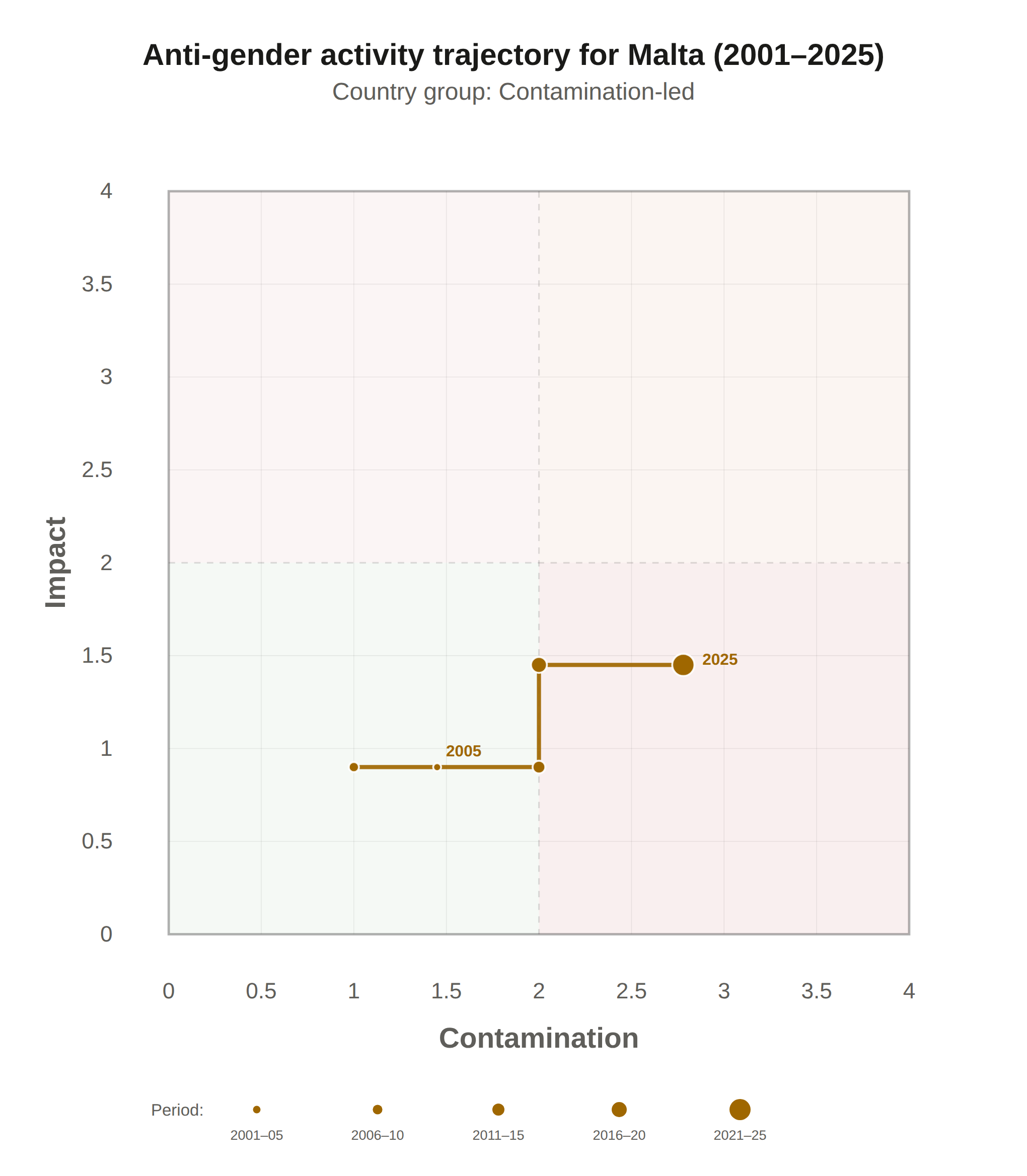
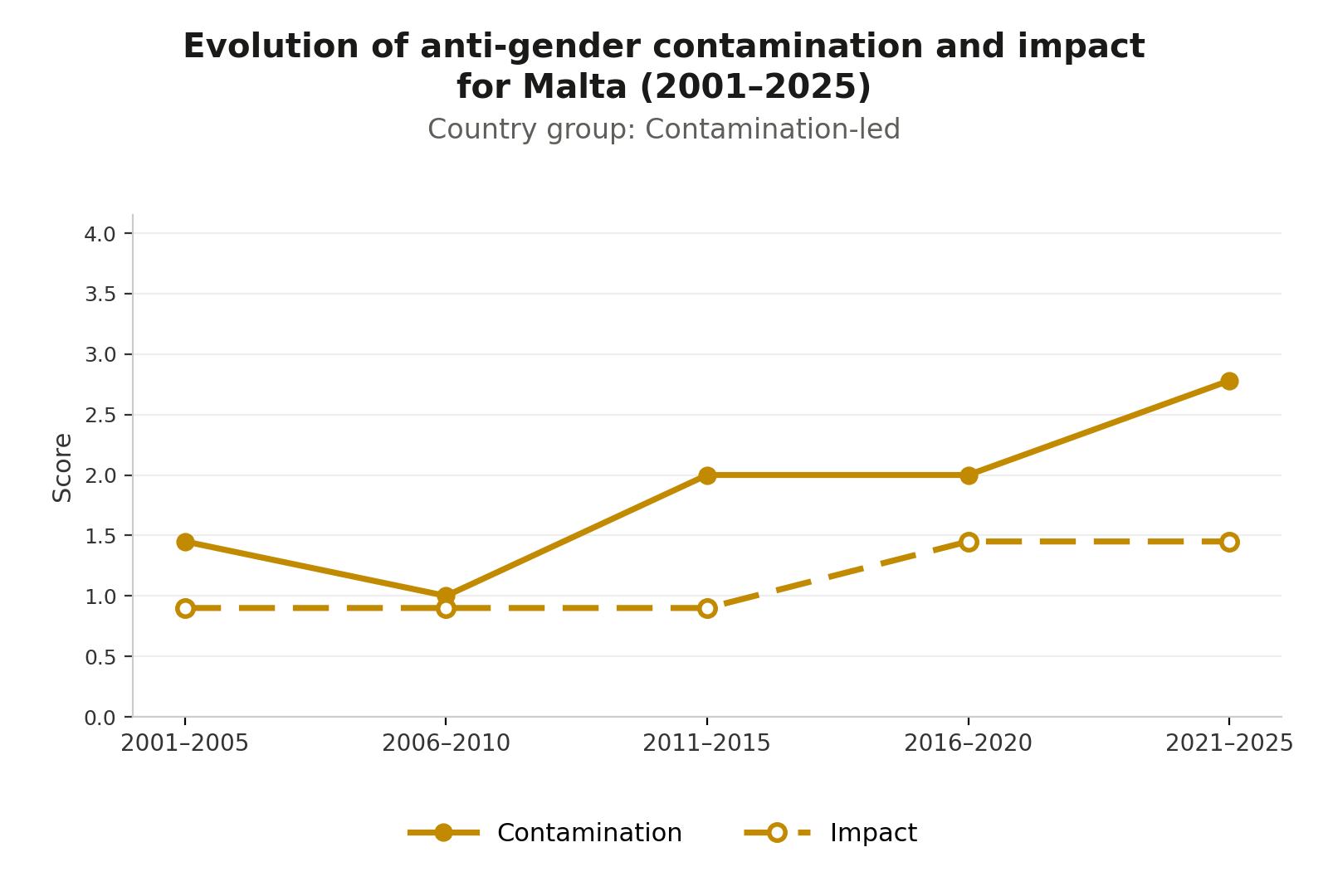
Key indicators in 2025: Contamination 2.78 / 4 · Impact 1.45 / 4
The anti-gender movement has operated on two asymmetric tracks over the past decades. On abortion, it has been broadly successful: sustained Church-led and civil society mobilisation has maintained an exceptionally restrictive framework and beaten back the one attempt at meaningful liberalisation in 2022. On the rights of LGBTIQ+ people, it has been largely ineffective, failing to prevent successive waves of reform under Labour governments from 2013 onwards. The movement has nonetheless evolved: from an early phase dominated by the Catholic Church and the Nationalist Party, to a second phase from around 2017 in which new actors — evangelical networks, Pro Malta Christiana and small Christian conservative parties — adopted a sharper ideological vocabulary drawn from international anti-gender networks. Its successful campaigns against the Equality Bill and against the 2022 abortion proposal show that sustained pressure can decisively shape legislation.
| Year | Abortion & Reproductive Rights | Sex & Relationship Education | LGBTIQ+ Visibility | Partnerships, Marriage & Family | Legal Gender Recognition & Healthcare | Istanbul Convention | Language & Gender Studies | Civil Society & Democratic Space |
|---|---|---|---|---|---|---|---|---|
| 1990s | ||||||||
| 2000 | ||||||||
| 2001 | ||||||||
| 2002 | ||||||||
| 2003 | ||||||||
| 2004 |
PI |
OT |
||||||
| 2005 | ||||||||
| 2006 | ||||||||
| 2007 | ||||||||
| 2008 | ||||||||
| 2009 | ||||||||
| 2010 | ||||||||
| 2011 | ||||||||
| 2012 |
PA |
|||||||
| 2013 |
A |
|||||||
| 2014 |
O |
|||||||
| 2015 |
D |
IA |
||||||
| 2016 |
PA |
|||||||
| 2017 |
LM |
A |
OM |
|||||
| 2018 |
M |
M |
OA |
|||||
| 2019 |
M |
M |
||||||
| 2020 |
M |
MA |
||||||
| 2021 |
M |
|||||||
| 2022 |
OMI |
OLM |
||||||
| 2023 |
MI |
D |
||||||
| 2024 |
MT |
|||||||
| 2025 |
M |
|||||||
| 2026 |
IT |
| OOpposition to progressive law or regulation/policy | PProposal or implementation of anti-gender law or regulation/policy | LStrategic litigation |
| MProtest or demonstration | IPetition or citizen initiative | AAdvocacy campaign |
| DDisinformation campaign | TTransnational interference |
The evolution of the anti-gender movement in Malta