The Hate Review
Montenegro
Country Group: Nascent mobilisation
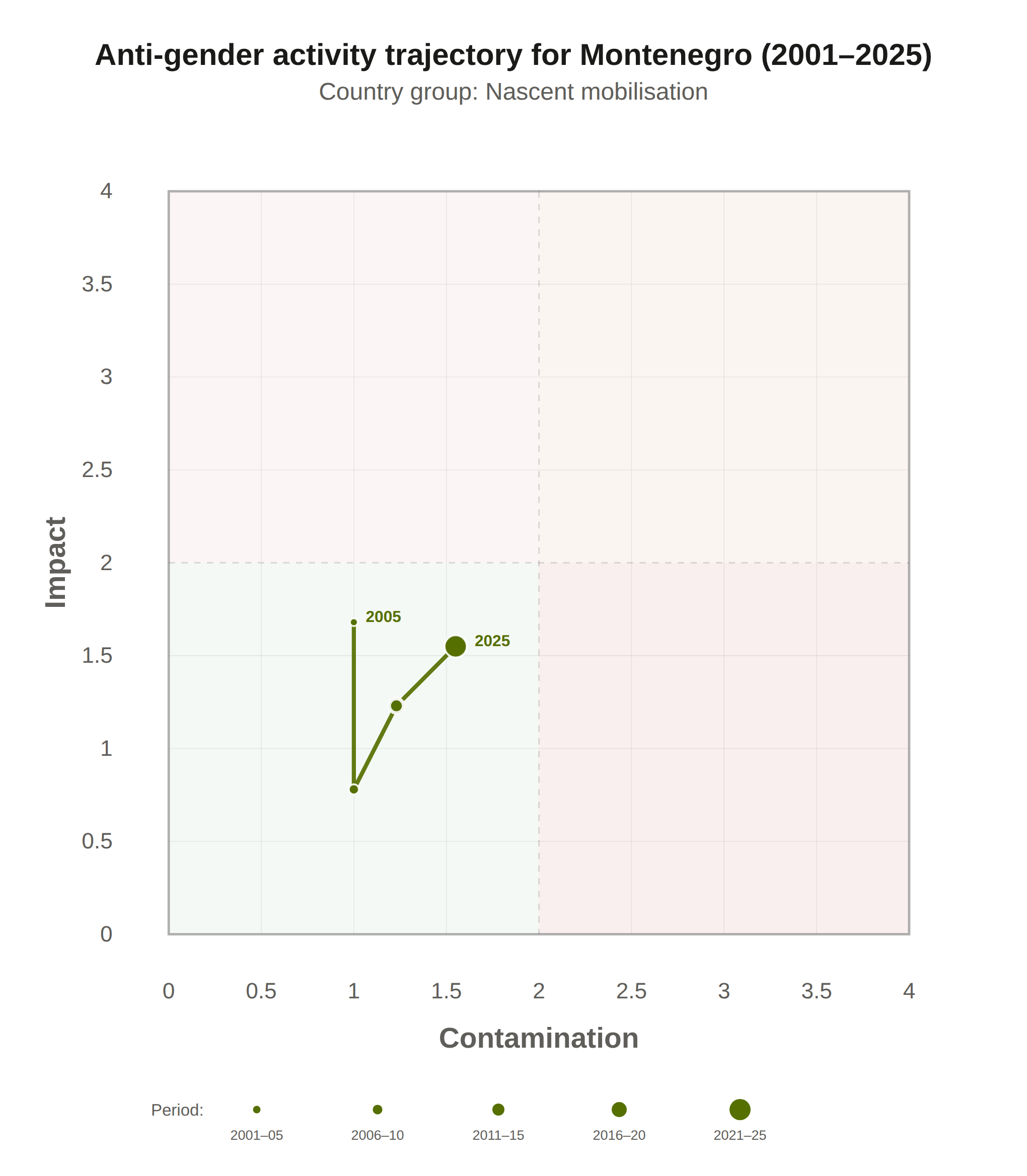
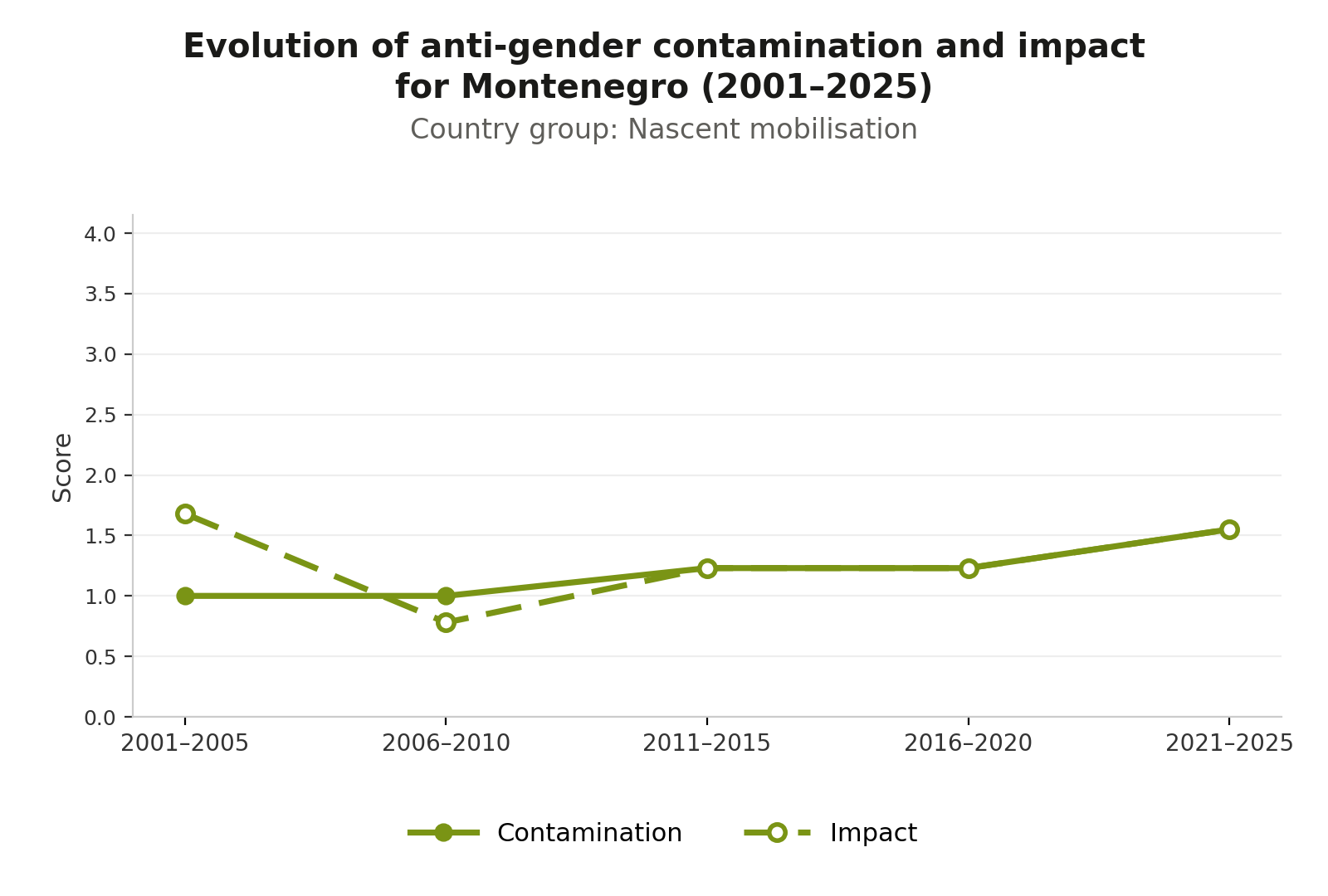
Key indicators in 2025: Contamination 1.55 / 4 · Impact 1.55 / 4
The trajectory of anti-gender activity in Montenegro over the past two decades is one of slow structural embedding rather than acute mobilisation. Opposition to the rights of LGBTIQ+ people has operated primarily through existing religious and political institutions — the Serbian Orthodox Church Metropolitanate and successive pro-Serbian parliamentary formations — without generating purpose-built anti-gender organisations or dedicated campaigns. The mass conservative mobilisations of 2019–2020 framed around church property proved pivotal: they installed political actors who have since functioned as a permanent veto on equality policy. Anti-gender positions are now embedded in the governing coalition’s arithmetic rather than expressed through street campaigns, and Montenegro is experiencing a quiet but steady drift: stagnation in law and policy, with the structural conditions for a more organised movement gradually forming.
| Year | Abortion & Reproductive Rights |
Sex & Relationship Education |
LGBTIQ+ Visibility |
Partnerships, Marriage & Family |
Legal Gender Recognition & Healthcare |
Istanbul Convention |
Language & Gender Studies |
Civil Society & Democratic Space |
|---|---|---|---|---|---|---|---|---|
| 1990s | ||||||||
| 2000 | ||||||||
| 2001 | ||||||||
| 2002 | ||||||||
| 2003 | ||||||||
| 2004 | ||||||||
| 2005 | ||||||||
| 2006 | ||||||||
| 2007 | ||||||||
| 2008 | ||||||||
| 2009 | ||||||||
| 2010 | ||||||||
| 2011 | ||||||||
| 2012 | A | |||||||
| 2013 | M | |||||||
| 2014 | M | |||||||
| 2015 | M | |||||||
| 2016 | ||||||||
| 2017 | ||||||||
| 2018 | ||||||||
| 2019 | O | |||||||
| 2020 | O | |||||||
| 2021 | A | |||||||
| 2022 | AD | M | ||||||
| 2023 | P | |||||||
| 2024 | OAD | P | ||||||
| 2025 | A | D | ||||||
| 2026 |
| OOpposition to progressive law or regulation/policy | PProposal or implementation of anti-gender law or regulation/policy | LStrategic litigation |
| MProtest or demonstration | IPetition or citizen initiative | AAdvocacy campaign |
| DDisinformation campaign | TTransnational interference |
The evolution of the anti-gender movement in Montenegro