The Hate Review
Norway
Country Group: Negligible mobilisation
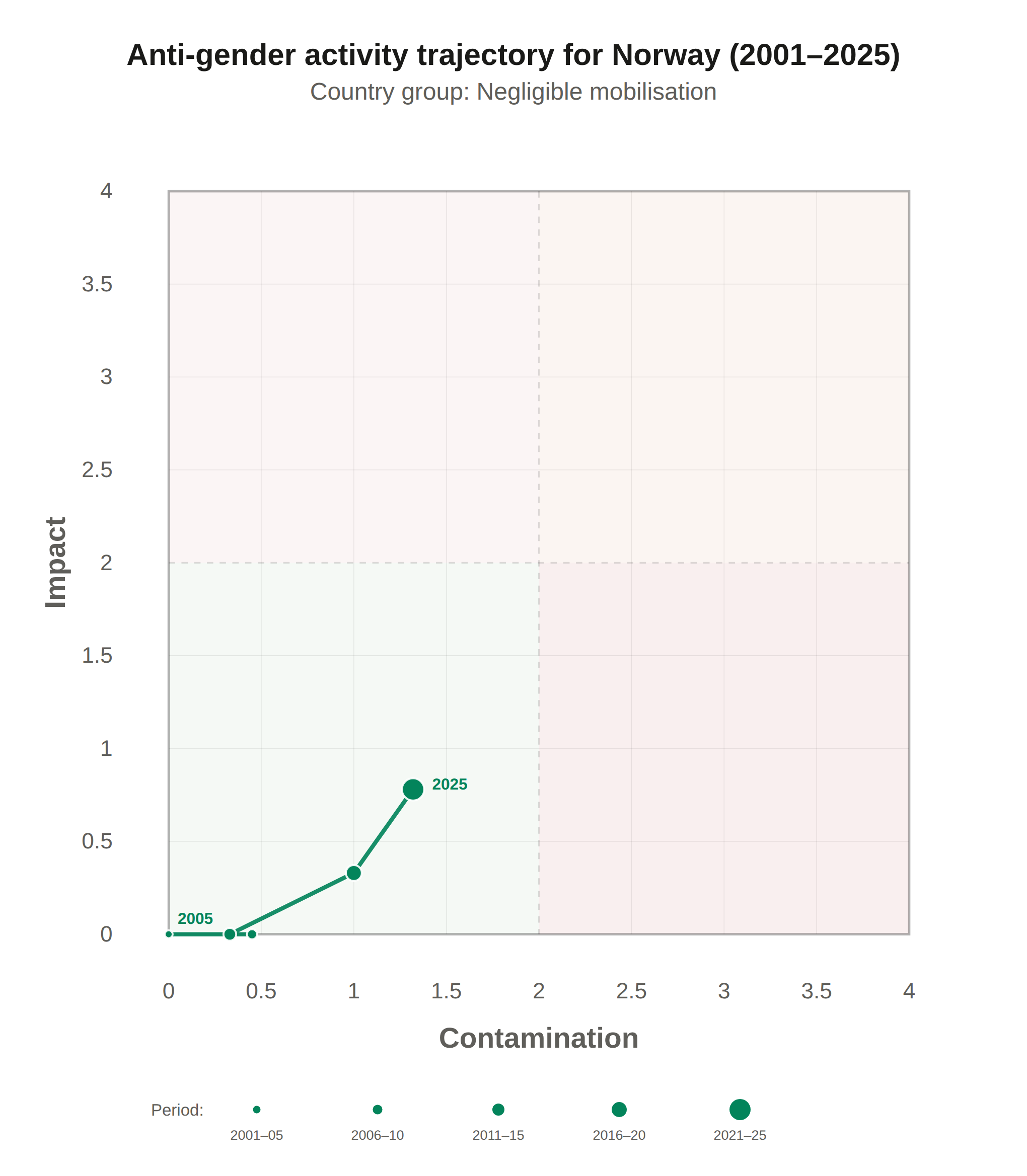
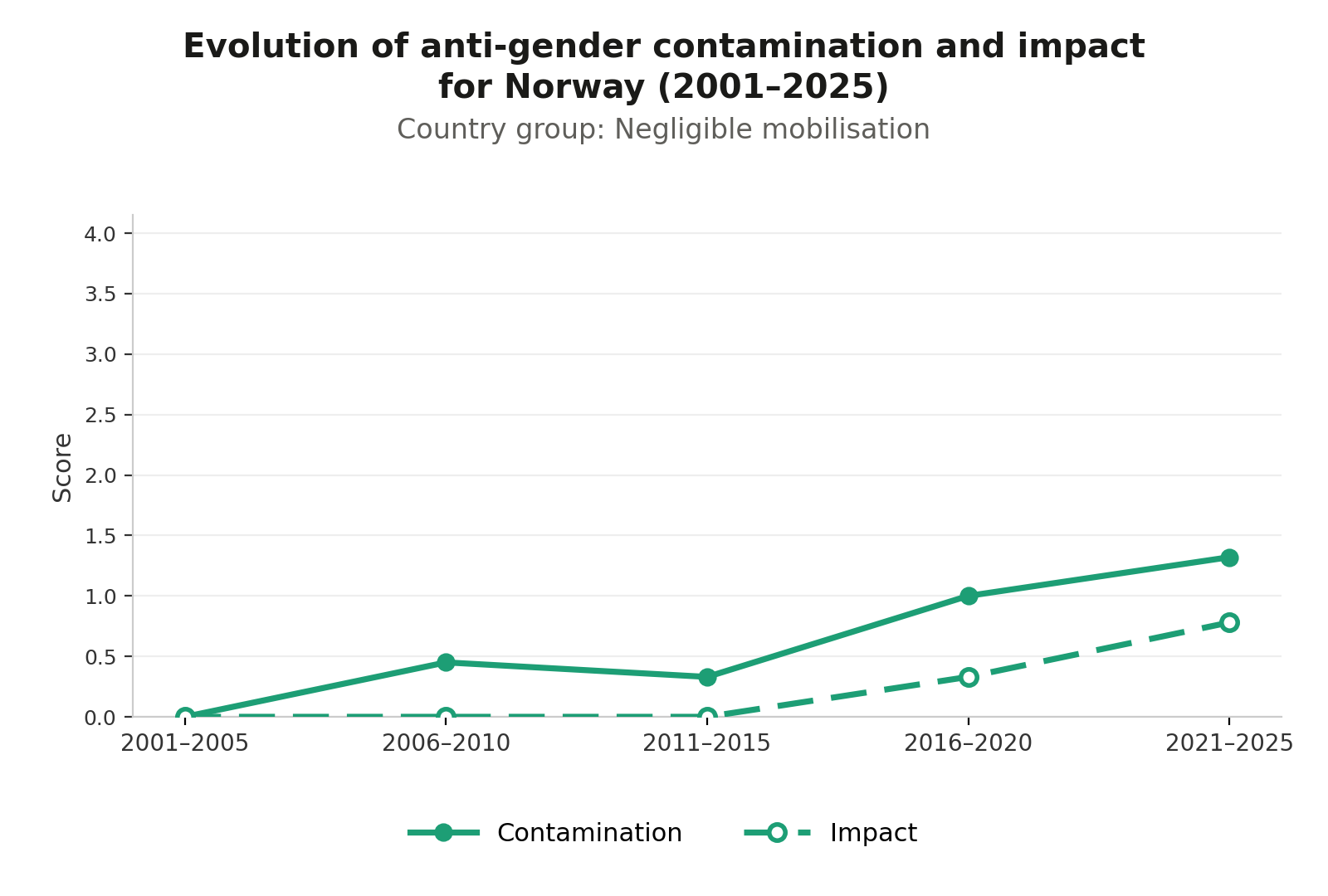
Key indicators in 2025: Contamination 1.32 / 4 · Impact 0.78 / 4
The trajectory of anti-gender activity in Norway has followed a pattern of gradual diversification and growing coordination. In the 2000s, opposition was led almost exclusively by the Christian Democratic Party (Kristelig Folkeparti, KrF) and allied faith-based actors, focused on marriage equality and framed in Christian theological terms. The 2016 legal gender recognition law marked a turning point, shifting the centre of gravity towards trans-related issues and progressively leading to the creation of new actors including so-called “gender critical” feminist groups and parent networks. From around 2021, opposition became increasingly coalitional, with disparate actors converging around the shared frame of “gender ideology” as a threat to children and families. Anti-gender activity in Norway remains reactive rather than systemic, operating primarily through campaigns, rhetoric and coordinated declarations.
| Year | Abortion & Reproductive Rights |
Sex & Relationship Education |
LGBTIQ+ Visibility |
Partnerships, Marriage & Family |
Legal Gender Recognition & Healthcare |
Istanbul Convention |
Language & Gender Studies |
Civil Society & Democratic Space |
|---|---|---|---|---|---|---|---|---|
| 1990s | O | |||||||
| 2000 | ||||||||
| 2001 | ||||||||
| 2002 | ||||||||
| 2003 | ||||||||
| 2004 | ||||||||
| 2005 | ||||||||
| 2006 | ||||||||
| 2007 | ||||||||
| 2008 | O | |||||||
| 2009 | ||||||||
| 2010 | ||||||||
| 2011 | ||||||||
| 2012 | MT | |||||||
| 2013 | ||||||||
| 2014 | ||||||||
| 2015 | ||||||||
| 2016 | O | |||||||
| 2017 | MT | |||||||
| 2018 | ||||||||
| 2019 | P | |||||||
| 2020 | A | |||||||
| 2021 | AT | |||||||
| 2022 | I | A | AT | |||||
| 2023 | O | |||||||
| 2024 | OIA | P | PMI | A | ||||
| 2025 | A | L | OAT | |||||
| 2026 |
| OOpposition to progressive law or regulation/policy | PProposal or implementation of anti-gender law or regulation/policy | LStrategic litigation |
| MProtest or demonstration | IPetition or citizen initiative | AAdvocacy campaign |
| DDisinformation campaign | TTransnational interference |
The evolution of the anti-gender movement in Norway