The Hate Review
Slovenia
Country Group: Contamination-led
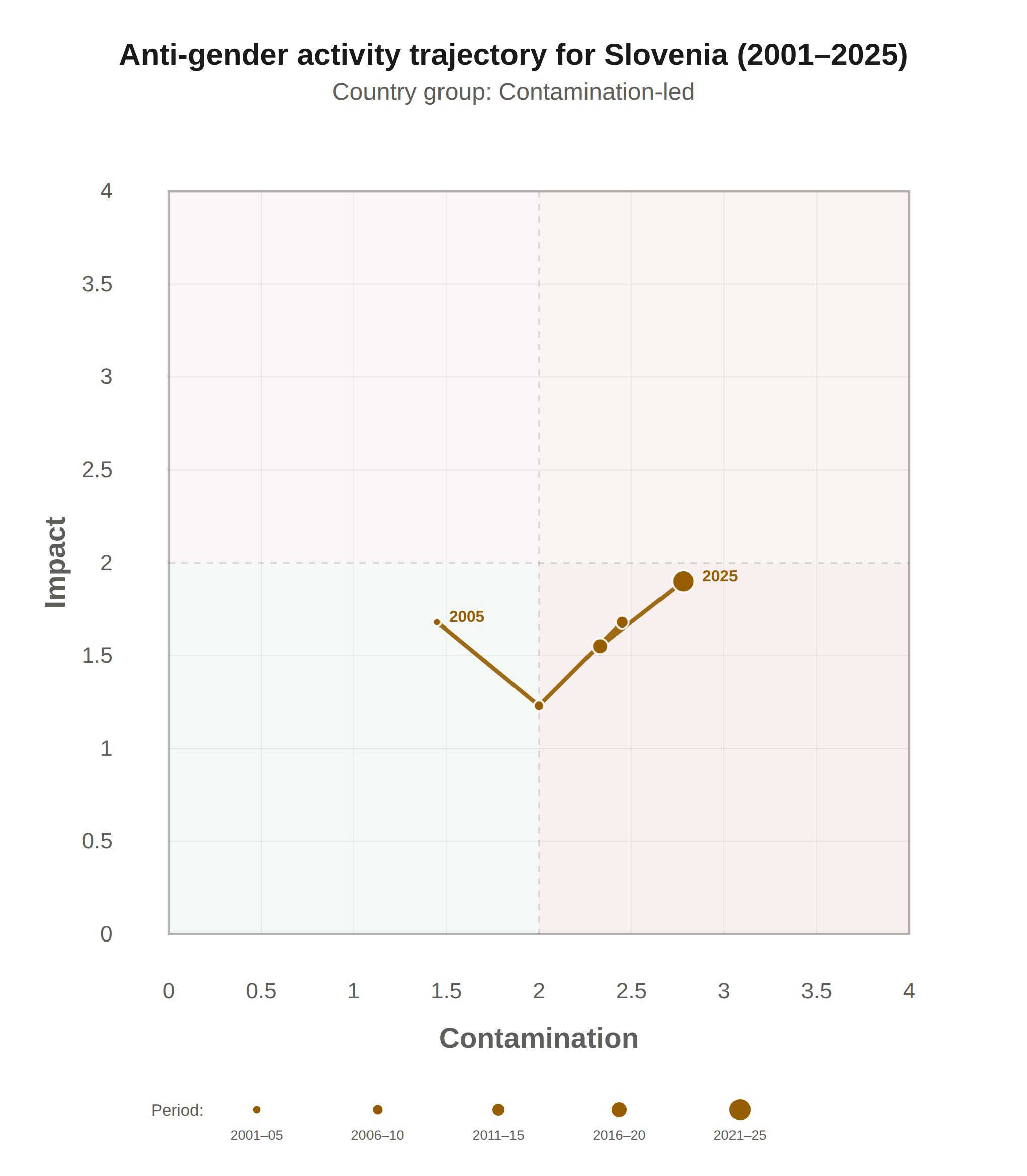
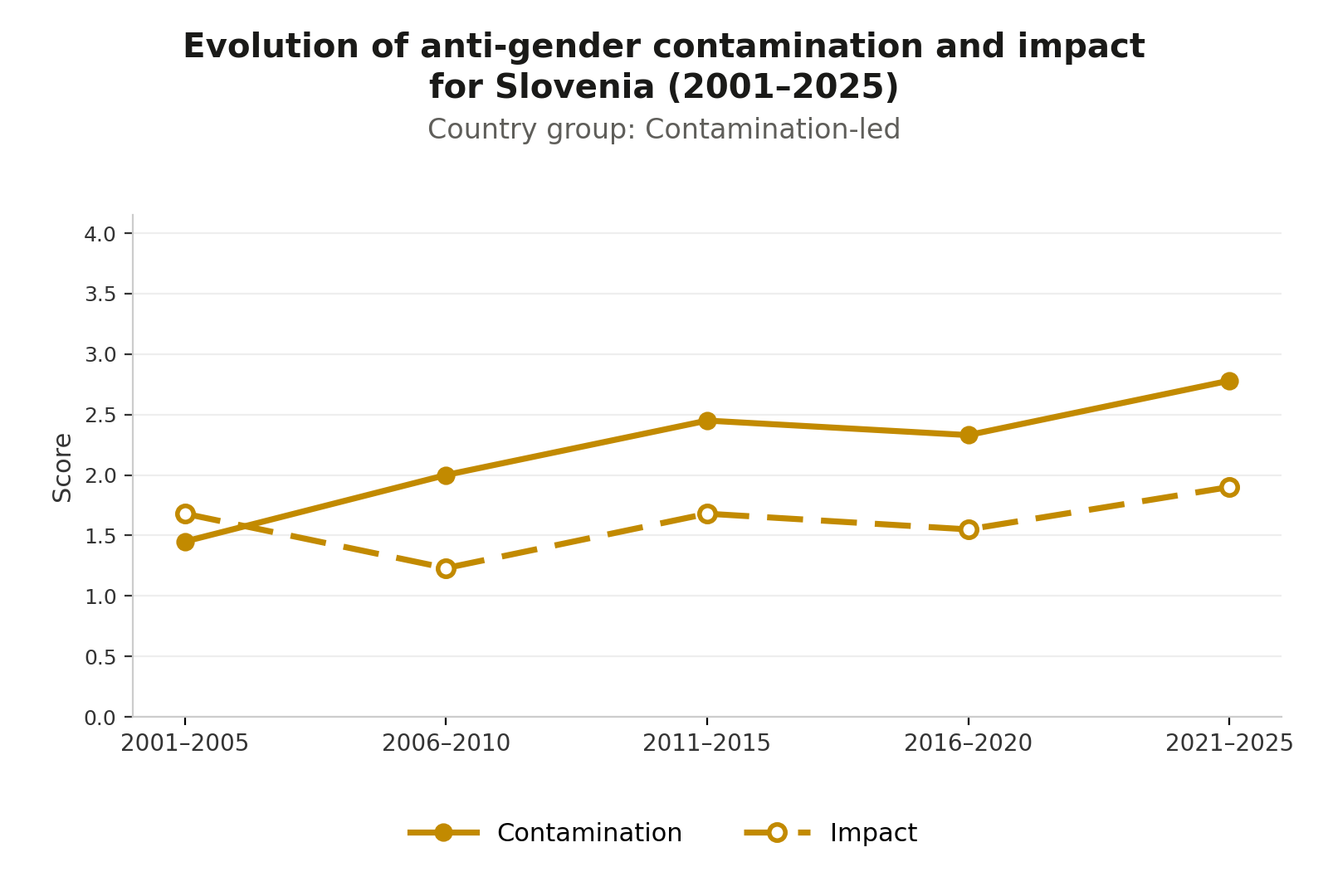
Key indicators in 2025: Contamination 2.78 / 4 · Impact 1.90 / 4
Slovenia’s anti-gender movement is one of the oldest and most institutionalised in the region, having emerged in 2001 with Aleš Primc’s successful referendum campaign against IVF access for single women. Over the subsequent two decades, the movement evolved from a loosely organised Catholic civil society initiative into a professionalised network combining a political party, a dedicated civil society infrastructure, annual mass mobilisation events and aligned media. It is backed by Slovenian Democratic Party and New Slovenia parliamentarians and by the Slovenian Bishops’ Conference. Its primary instrument has been the referendum mechanism, deployed successfully in 2001, 2012, 2015 and 2025, and attempted in 2022 and 2025 on family law and IVF. The movement’s agenda has broadened significantly since 2020, extending from family law into gender recognition, educational content and end-of-life legislation under a unifying “gender theory” frame.
| Year | Abortion & Reproductive Rights |
Sex & Relationship Education |
LGBTIQ+ Visibility |
Partnerships, Marriage & Family |
Legal Gender Recognition & Healthcare |
Istanbul Convention |
Language & Gender Studies |
Civil Society & Democratic Space |
|---|---|---|---|---|---|---|---|---|
| 1990s | ||||||||
| 2000 | ||||||||
| 2001 | PI | |||||||
| 2002 | ||||||||
| 2003 | ||||||||
| 2004 | ||||||||
| 2005 | O | |||||||
| 2006 | P | |||||||
| 2007 | ||||||||
| 2008 | ||||||||
| 2009 | ||||||||
| 2010 | ||||||||
| 2011 | OM | |||||||
| 2012 | PI | |||||||
| 2013 | ||||||||
| 2014 | M | |||||||
| 2015 | OPIA | |||||||
| 2016 | O | |||||||
| 2017 | ||||||||
| 2018 | ||||||||
| 2019 | ||||||||
| 2020 | M | |||||||
| 2021 | M | PT | ||||||
| 2022 | M | OPLMIA | A | |||||
| 2023 | M | L | ||||||
| 2024 | OM | PT | P | |||||
| 2025 | OPLMI | P | ||||||
| 2026 |
| OOpposition to progressive law or regulation/policy | PProposal or implementation of anti-gender law or regulation/policy | LStrategic litigation |
| MProtest or demonstration | IPetition or citizen initiative | AAdvocacy campaign |
| DDisinformation campaign | TTransnational interference |
The evolution of the anti-gender movement in Slovenia