The Hate Review
Bosnia and Herzegovina
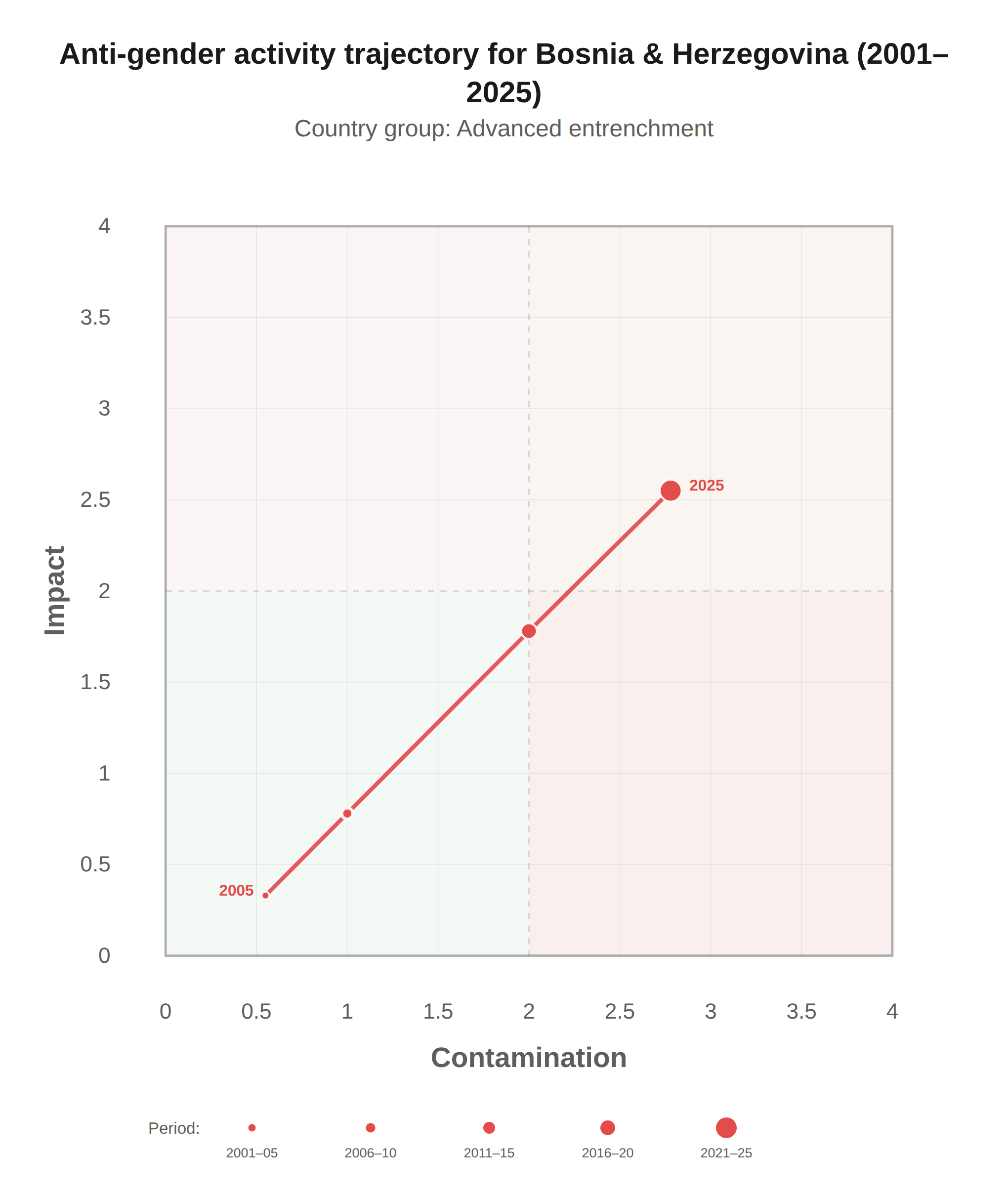
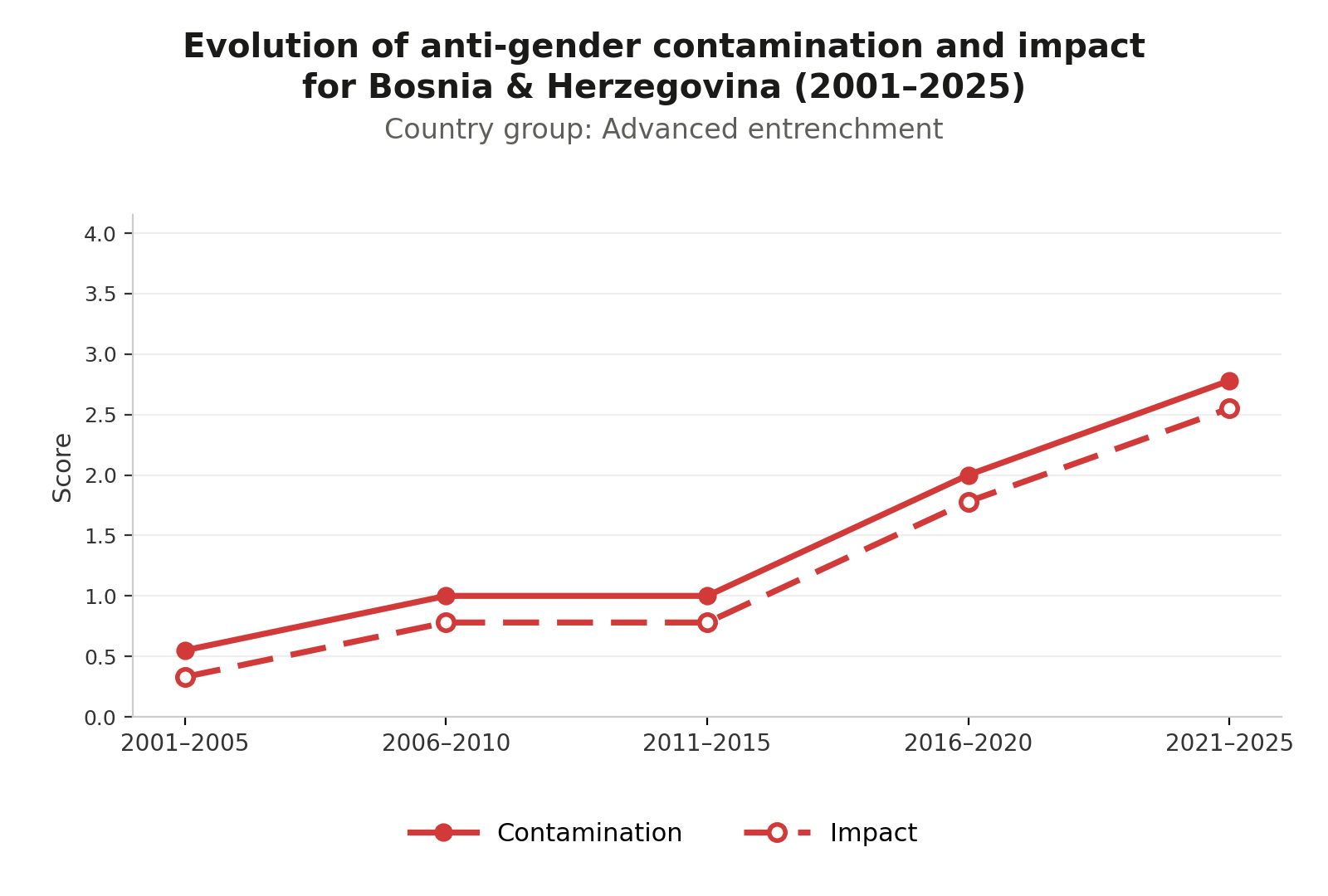
Key indicators in 2025: Contamination 2.78 / 4 · Impact 2.55 / 4
Anti-gender mobilisation in Bosnia and Herzegovina has been shaped by the country’s post-war ethno-nationalist structure. Through the early post-war period and the 2010s, opposition to the rights of LGBTIQ+ people and to gender equality was embedded in ethno-nationalist and religious conservatism rather than constituting a distinct movement — the 2008 violent attack on the Queer Sarajevo Festival being the starkest early illustration. The Istanbul Convention was ratified in 2014 without major controversy. The decisive turning point was the first Sarajevo Pride in 2019, which triggered explicit organised counter-mobilisation for the first time. Since 2021, anti-gender activity has intensified sharply in Republika Srpska, where the leadership of the Alliance of Independent Social Democrats (SNSD) has fused anti-gender positioning with sovereignty and anti-Western rhetoric, transforming cultural conservatism into a tool of political mobilisation and state-sponsored anti-gender governance.
| Year | Abortion & Reproductive Rights | Sex & Relationship Education | LGBTIQ+ Visibility | Partnerships, Marriage & Family | Legal Gender Recognition & Healthcare | Istanbul Convention | Language & Gender Studies | Civil Society & Democratic Space |
|---|---|---|---|---|---|---|---|---|
| 1990s | ||||||||
| 2000 | ||||||||
| 2001 | ||||||||
| 2002 | ||||||||
| 2003 | ||||||||
| 2004 | ||||||||
| 2005 | ||||||||
| 2006 | ||||||||
| 2007 | ||||||||
| 2008 |
M |
|||||||
| 2009 | ||||||||
| 2010 | ||||||||
| 2011 | ||||||||
| 2012 | ||||||||
| 2013 | ||||||||
| 2014 | ||||||||
| 2015 | ||||||||
| 2016 | ||||||||
| 2017 | ||||||||
| 2018 | ||||||||
| 2019 |
M |
|||||||
| 2020 | ||||||||
| 2021 | ||||||||
| 2022 |
M |
|||||||
| 2023 |
M |
PT |
PMA |
O |
PT |
|||
| 2024 |
DT |
P |
L |
|||||
| 2025 |
MT |
A |
OP |
P |
P |
PT |
||
| 2026 |
P |
| OOpposition to progressive law or regulation/policy | PProposal or implementation of anti-gender law or regulation/policy | LStrategic litigation |
| MProtest or demonstration | IPetition or citizen initiative | AAdvocacy campaign |
| DDisinformation campaign | TTransnational interference |
The evolution of the anti-gender movement in Bosnia and Herzegovina