The Hate Review
Greece
Country Group: Nascent mobilisation
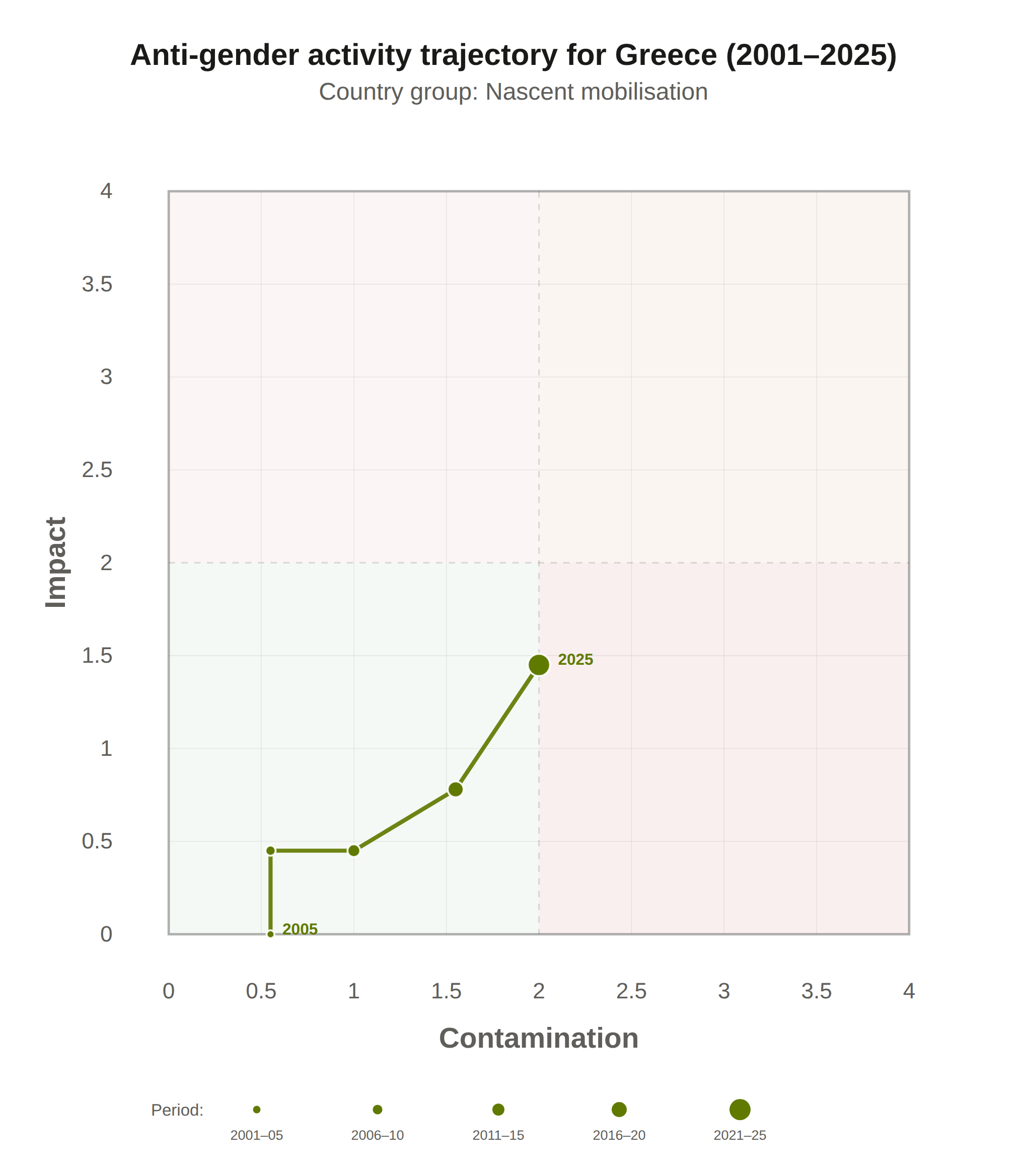
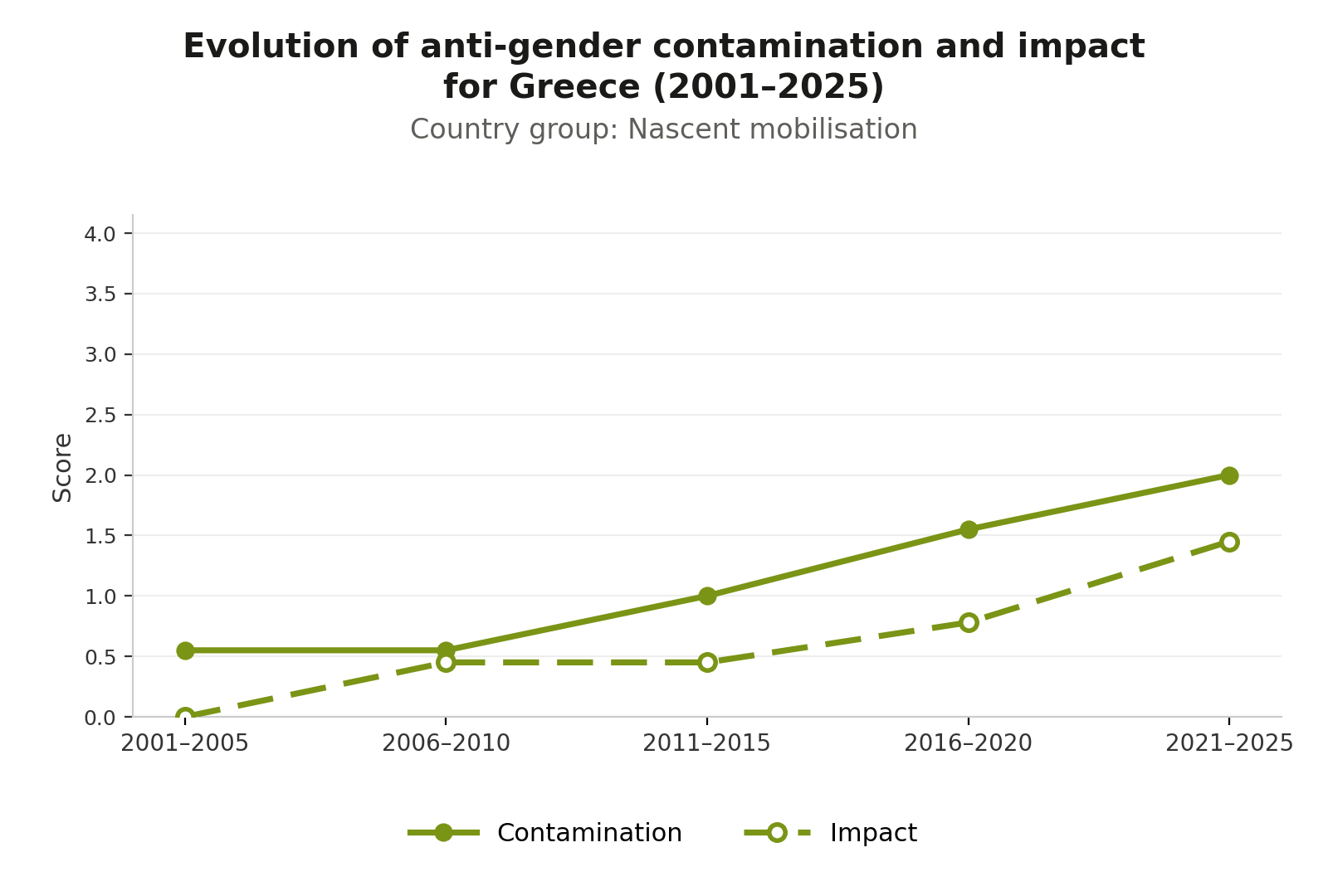
Key indicators in 2025: Contamination 2.00 / 4 · Impact 1.45 / 4
The dominant actor in the Greek anti-gender landscape is the Orthodox Church, which functions as the primary institutional vehicle for conservative mobilisation, operating through a dense network of lay associations, parish structures and direct political access. Secular anti-gender organisations of the kind found elsewhere in Europe remain underdeveloped, and street mobilisation has been modest. Greece therefore illustrates a model in which anti-gender influence is exercised less through countervailing social movements than through institutional proximity: a powerful Church with constitutional standing, a governing party with a significant conservative internal wing, and a tightly interlocking network of Orthodox associations that activate reliably at each legislative flashpoint. The overall trajectory is one of incremental progress accompanied by persistent attrition — where formal rollback has so far been blocked, but the space for further advance remains structurally constrained.
| Year | Abortion & Reproductive Rights |
Sex & Relationship Education |
LGBTIQ+ Visibility |
Partnerships, Marriage & Family |
Legal Gender Recognition & Healthcare |
Istanbul Convention |
Language & Gender Studies |
Civil Society & Democratic Space |
|---|---|---|---|---|---|---|---|---|
| 1990s | ||||||||
| 2000 | ||||||||
| 2001 | ||||||||
| 2002 | ||||||||
| 2003 | ||||||||
| 2004 | ||||||||
| 2005 | ||||||||
| 2006 | ||||||||
| 2007 | ||||||||
| 2008 | ||||||||
| 2009 | ||||||||
| 2010 | ||||||||
| 2011 | ||||||||
| 2012 | ||||||||
| 2013 | ||||||||
| 2014 | OA | |||||||
| 2015 | OM | |||||||
| 2016 | ||||||||
| 2017 | OA | OMA | ||||||
| 2018 | ||||||||
| 2019 | D | P | ||||||
| 2020 | M | D | ||||||
| 2021 | OM | P | ||||||
| 2022 | ||||||||
| 2023 | A | PM | ||||||
| 2024 | A | MD | OLMA | P | ||||
| 2025 | P | |||||||
| 2026 | A |
| OOpposition to progressive law or regulation/policy | PProposal or implementation of anti-gender law or regulation/policy | LStrategic litigation |
| MProtest or demonstration | IPetition or citizen initiative | AAdvocacy campaign |
| DDisinformation campaign | TTransnational interference |
The evolution of the anti-gender movement in Greece