The Hate Review
Latvia
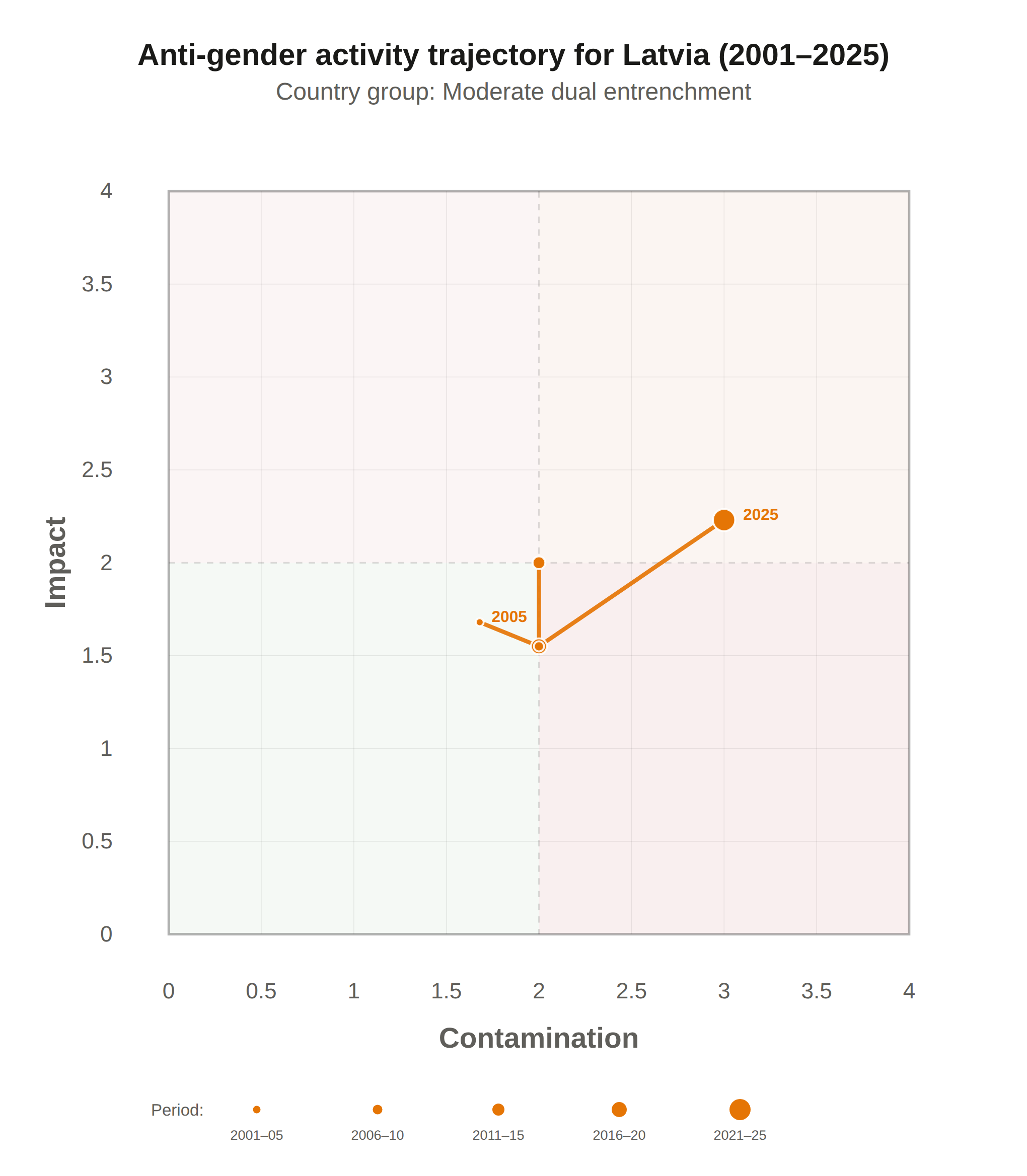
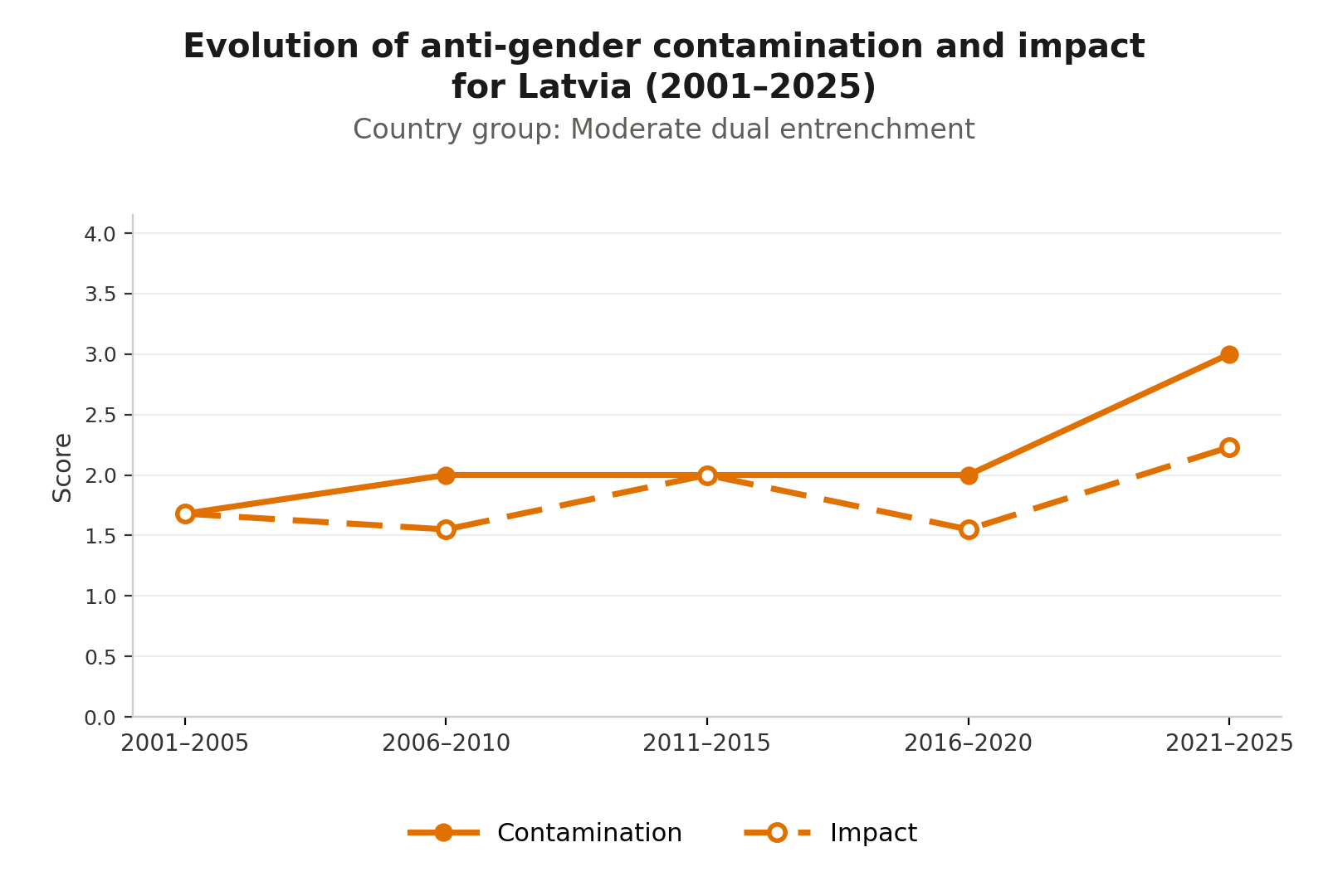
Key indicators in 2025: Contamination 3.00 / 4 · Impact 2.23 / 4
The trajectory of anti-gender activity in Latvia has been one of gradual escalation, punctuated by moments of reactive intensification whenever progressive legal gains appeared within reach. The movement’s centre of gravity has shifted over time: from church-led moral condemnation and street counter-mobilisation in the mid-2000s, to sustained parliamentary obstruction through the 2010s, to a more aggressive and coordinated offensive in the 2020s combining disinformation campaigns, constitutional challenges and international treaty withdrawal. Each legislative advance — the 2020 Constitutional Court ruling on same-sex family protection, the 2023 civil union law — has generated a sharper and more organised backlash than the one before. The most significant recent development is the October 2025 Saeima vote to withdraw from the Istanbul Convention, which crystallises this trajectory and reflects the pivotal defection of the Union of Greens and Farmers to the anti-gender bloc.
| Year | Abortion & Reproductive Rights | Sex & Relationship Education | LGBTIQ+ Visibility | Partnerships, Marriage & Family | Legal Gender Recognition & Healthcare | Istanbul Convention | Language & Gender Studies | Civil Society & Democratic Space |
|---|---|---|---|---|---|---|---|---|
| 1990s |
O |
|||||||
| 2000 | ||||||||
| 2001 | ||||||||
| 2002 | ||||||||
| 2003 | ||||||||
| 2004 | ||||||||
| 2005 |
PM |
P |
||||||
| 2006 |
OPM |
|||||||
| 2007 |
MA |
|||||||
| 2008 | ||||||||
| 2009 |
P |
O |
||||||
| 2010 | ||||||||
| 2011 | ||||||||
| 2012 | ||||||||
| 2013 |
IT |
|||||||
| 2014 | ||||||||
| 2015 |
P |
O |
||||||
| 2016 |
P |
P |
||||||
| 2017 | ||||||||
| 2018 |
O |
A |
||||||
| 2019 |
O |
|||||||
| 2020 | ||||||||
| 2021 |
P |
|||||||
| 2022 |
P |
P |
O |
|||||
| 2023 |
D |
PI |
OM |
|||||
| 2024 |
P |
|||||||
| 2025 |
P |
P |
L |
PT |
PMDT |
|||
| 2026 |
| OOpposition to progressive law or regulation/policy | PProposal or implementation of anti-gender law or regulation/policy | LStrategic litigation |
| MProtest or demonstration | IPetition or citizen initiative | AAdvocacy campaign |
| DDisinformation campaign | TTransnational interference |
The evolution of the anti-gender movement in Latvia