The Hate Review
Luxembourg
Country Group: Negligible mobilisation
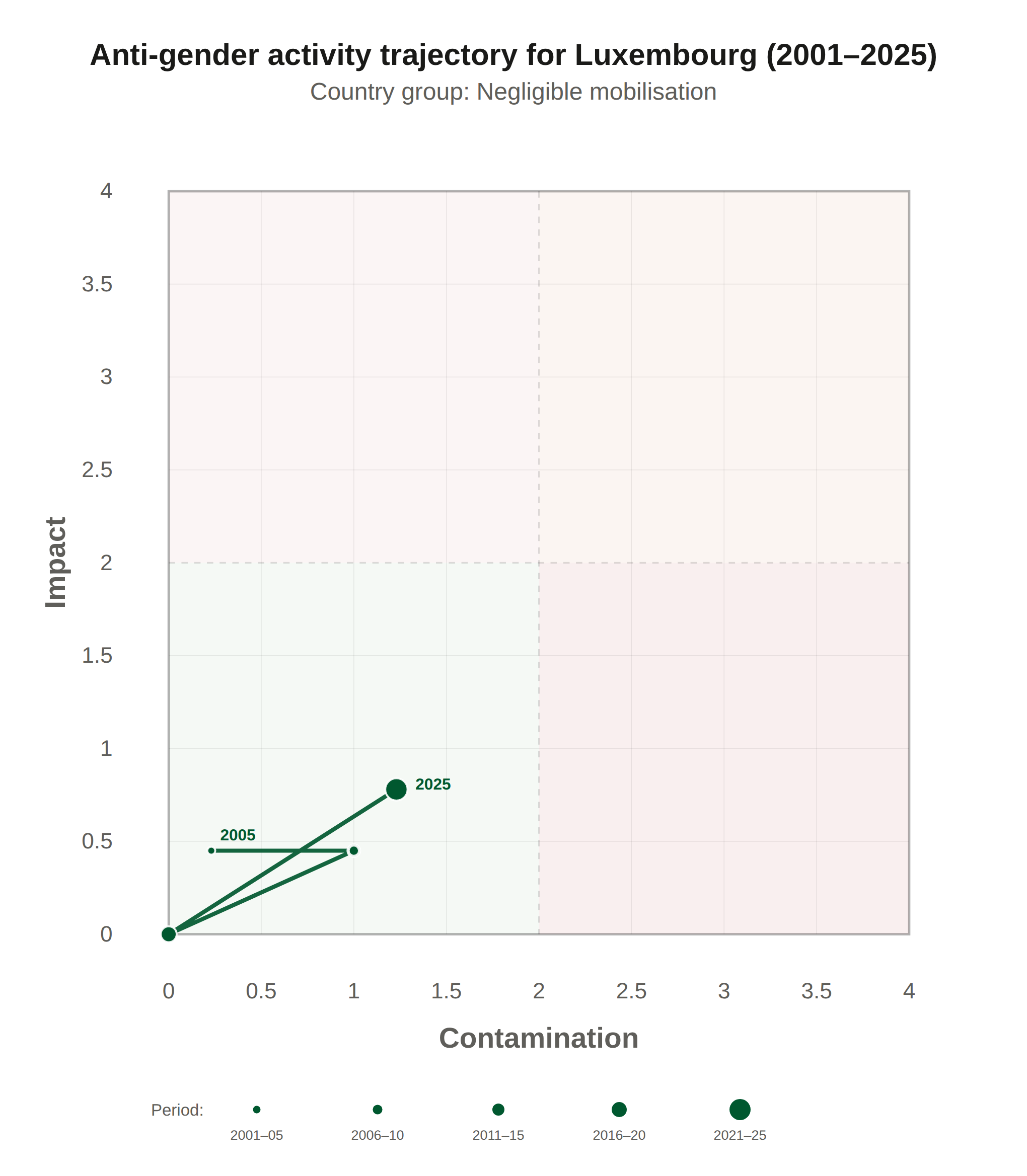
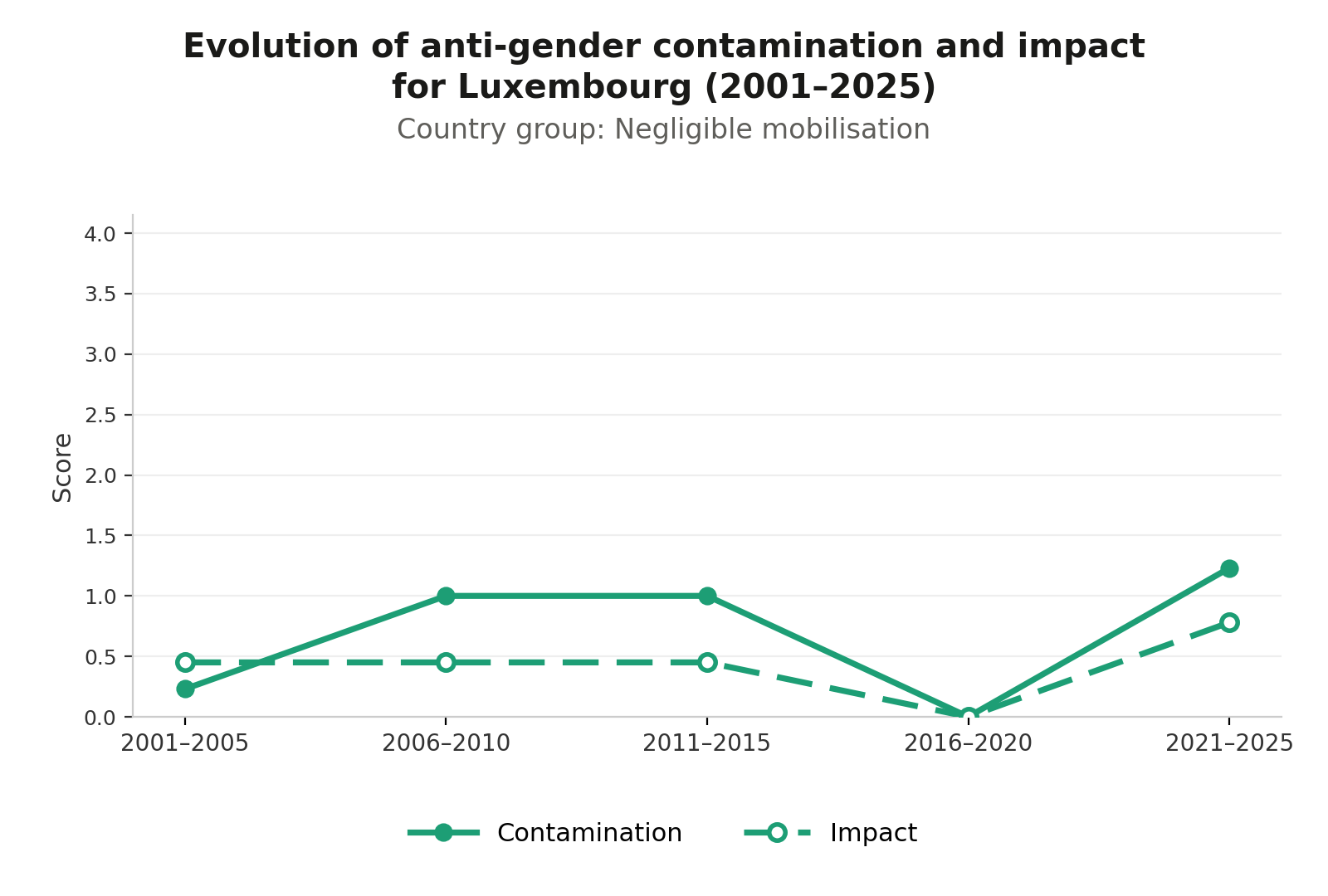
Key indicators in 2025: Contamination 1.23 / 4 · Impact 0.78 / 4
The trajectory of anti-gender activity over the period has been one of persistent marginalisation punctuated by sporadic external interventions. In the early 2000s, the Alternative Democratic Reform Party (ADR) shared its opposition to progressive reforms with the governing Christian Social People’s Party (CSV); by 2014 the CSV had defected, leaving the ADR as the sole unbroken source of parliamentary opposition. External actors made targeted interventions during the 2010–2014 legislative cycle — chiefly the Brussels-based Fédération Pro Europa Christiana, which has no membership base in the country — but generated no durable domestic movement. From 2022 onwards, the ADR adopted international right-wing populist framing around education and children. Isolated anti-gender mobilisation began to emerge from outside formal party structures, suggesting that anti-gender narratives have started to find traction among individuals and small ad hoc groups beyond the ADR’s electoral base.
| Year | Abortion & Reproductive Rights |
Sex & Relationship Education |
LGBTIQ+ Visibility |
Partnerships, Marriage & Family |
Legal Gender Recognition & Healthcare |
Istanbul Convention |
Language & Gender Studies |
Civil Society & Democratic Space |
|---|---|---|---|---|---|---|---|---|
| 1990s | ||||||||
| 2000 | ||||||||
| 2001 | ||||||||
| 2002 | ||||||||
| 2003 | ||||||||
| 2004 | O | |||||||
| 2005 | ||||||||
| 2006 | ||||||||
| 2007 | ||||||||
| 2008 | ||||||||
| 2009 | ||||||||
| 2010 | AT | |||||||
| 2011 | IT | |||||||
| 2012 | OMAT | |||||||
| 2013 | ||||||||
| 2014 | OMA | OMIAT | ||||||
| 2015 | P | |||||||
| 2016 | ||||||||
| 2017 | ||||||||
| 2018 | O | |||||||
| 2019 | ||||||||
| 2020 | ||||||||
| 2021 | ||||||||
| 2022 | ||||||||
| 2023 | A | |||||||
| 2024 | I | |||||||
| 2025 | PIA | A | ||||||
| 2026 | O |
| OOpposition to progressive law or regulation/policy | PProposal or implementation of anti-gender law or regulation/policy | LStrategic litigation |
| MProtest or demonstration | IPetition or citizen initiative | AAdvocacy campaign |
| DDisinformation campaign | TTransnational interference |
The evolution of the anti-gender movement in Luxembourg