The Hate Review
Monaco
Country Group: Structural state conservatism
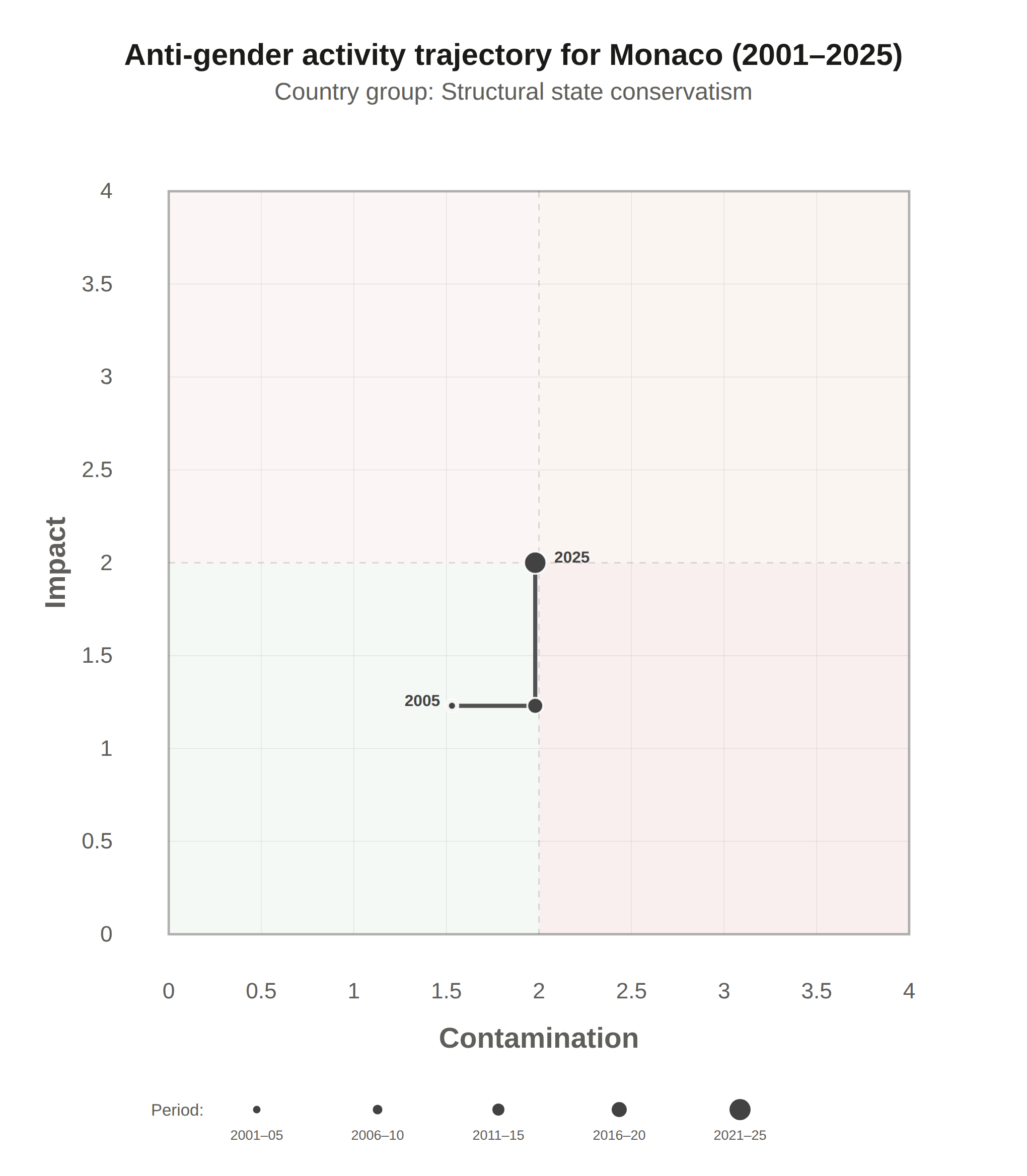
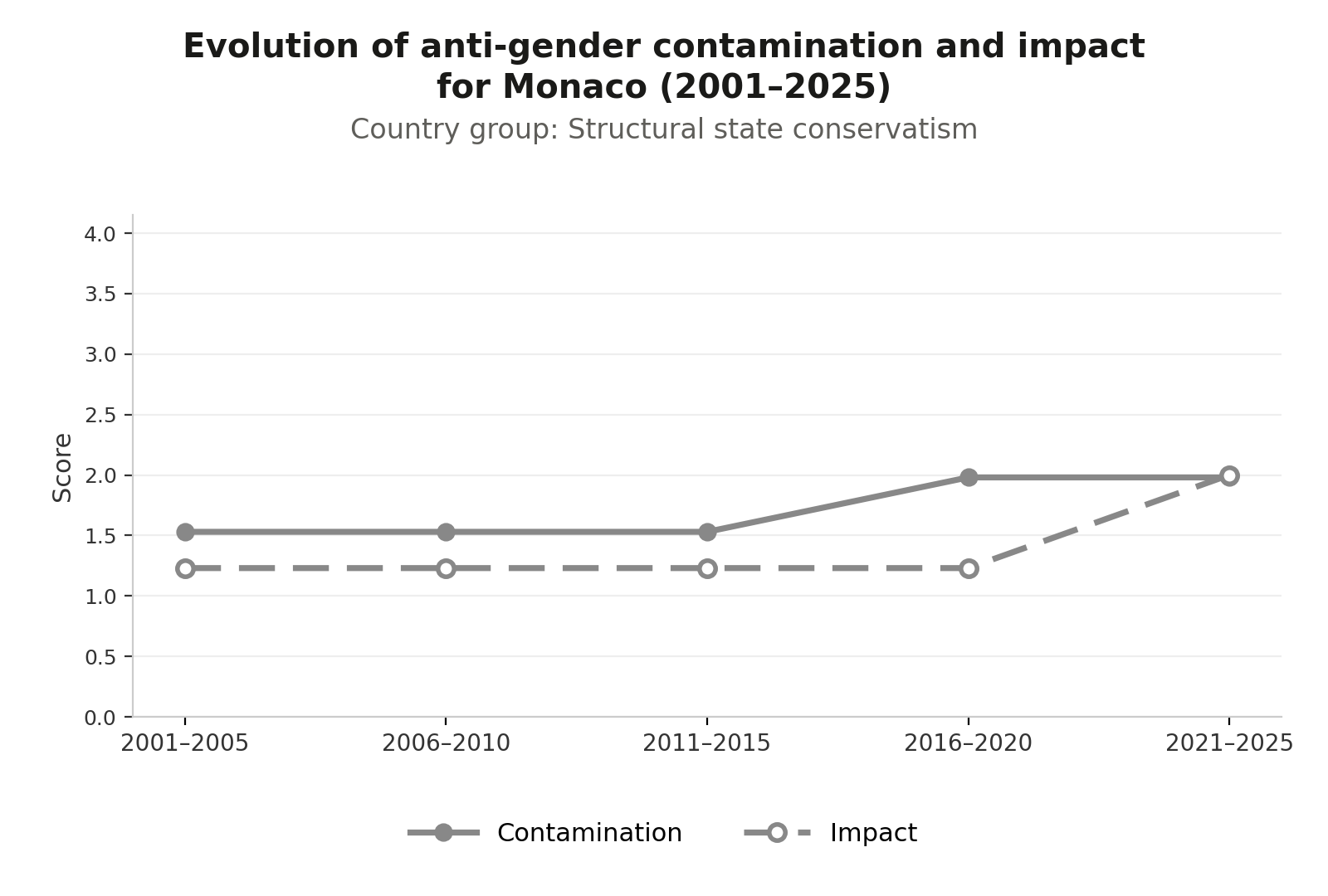
Key indicators in 2025: Contamination 1.98 / 4 · Impact 2.00 / 4
Monaco’s anti-gender configuration is distinctive in the European context: it operates through constitutional architecture rather than through a civil society movement. Article 9 of the 1962 Constitution, which designates Catholicism as the state religion, and the Prince’s extensive powers to block or condition legislation, make the sovereign and the Catholic Diocese the structural anti-gender actors, rendering independent civil society mobilisation unnecessary. No anti-gender protests, public campaigns or organised disinformation activity have been identified in the Principality over the period. The dominant pattern has been consistent: the Conseil National proposes progressive reform, the Church signals opposition, and the Prince or government blocks or conditions the outcome. The 2024 Court of Revision ruling on foreign same-sex marriage recognition and the November 2025 abortion veto are the most recent and most explicit expressions of this enduring dynamic.
| Year | Abortion & Reproductive Rights |
Sex & Relationship Education |
LGBTIQ+ Visibility |
Partnerships, Marriage & Family |
Legal Gender Recognition & Healthcare |
Istanbul Convention |
Language & Gender Studies |
Civil Society & Democratic Space |
|---|---|---|---|---|---|---|---|---|
| 1990s | ||||||||
| 2000 | ||||||||
| 2001 | ||||||||
| 2002 | ||||||||
| 2003 | ||||||||
| 2004 | ||||||||
| 2005 | ||||||||
| 2006 | ||||||||
| 2007 | O | |||||||
| 2008 | ||||||||
| 2009 | A | |||||||
| 2010 | ||||||||
| 2011 | ||||||||
| 2012 | ||||||||
| 2013 | ||||||||
| 2014 | ||||||||
| 2015 | ||||||||
| 2016 | ||||||||
| 2017 | ||||||||
| 2018 | ||||||||
| 2019 | A | A | ||||||
| 2020 | ||||||||
| 2021 | ||||||||
| 2022 | ||||||||
| 2023 | ||||||||
| 2024 | ||||||||
| 2025 | OPA | O | ||||||
| 2026 |
| OOpposition to progressive law or regulation/policy | PProposal or implementation of anti-gender law or regulation/policy | LStrategic litigation |
| MProtest or demonstration | IPetition or citizen initiative | AAdvocacy campaign |
| DDisinformation campaign | TTransnational interference |
The evolution of the anti-gender movement in Monaco