The Hate Review
Portugal
Country Group: Advanced entrenchment
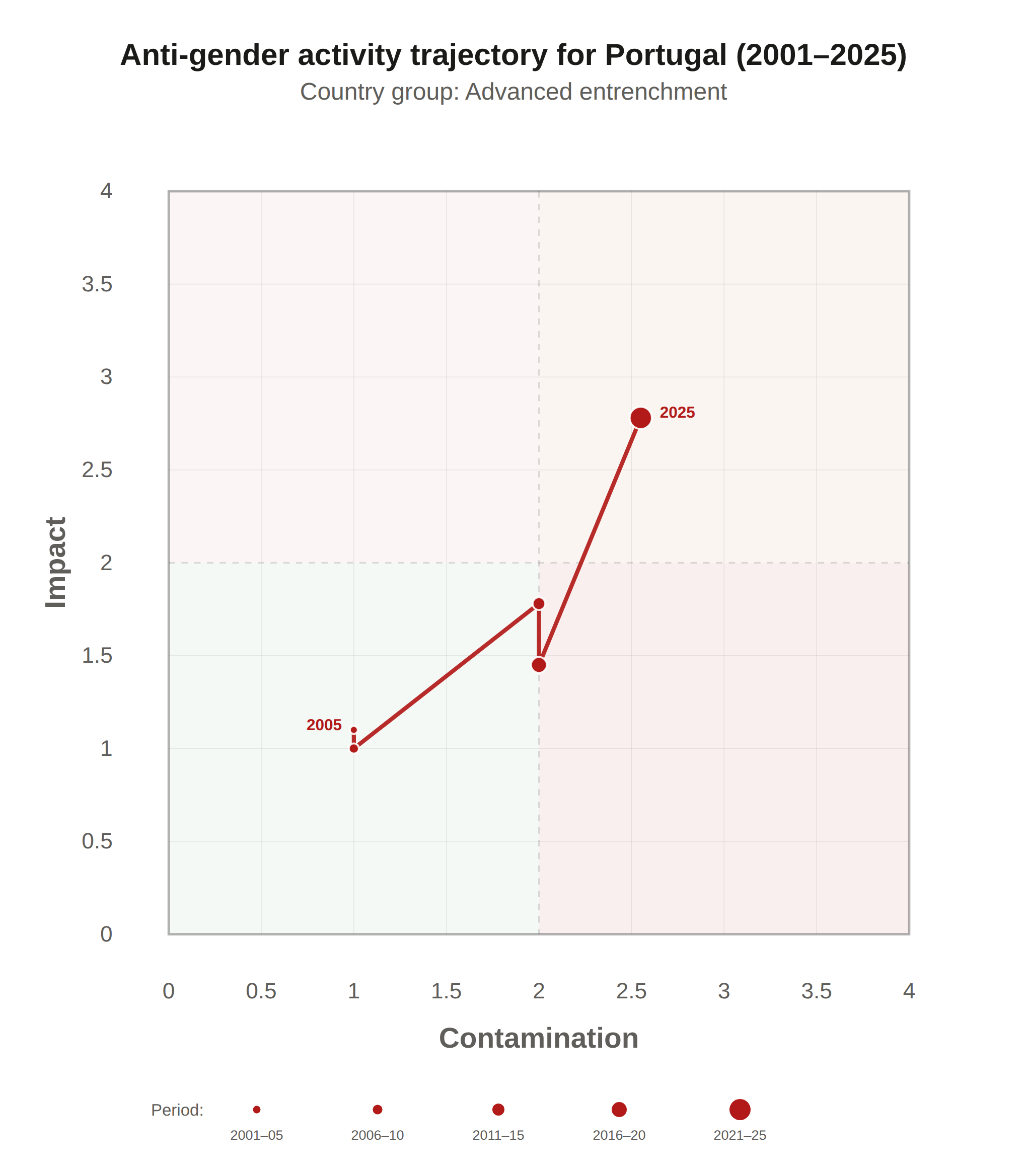
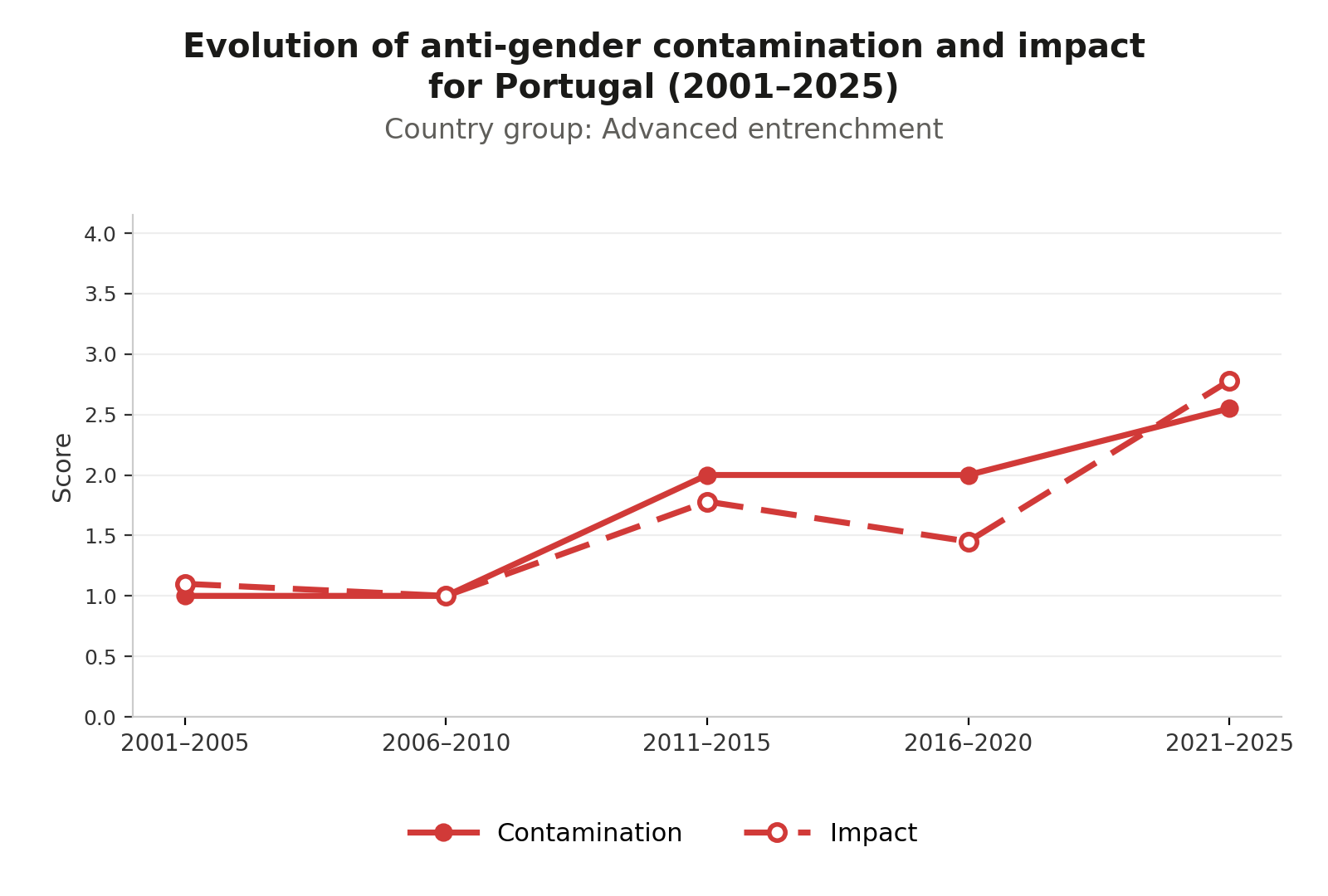
Key indicators in 2025: Contamination 2.55 / 4 · Impact 2.78 / 4
The trajectory of anti-gender activity in Portugal has moved through three distinct phases. From 1998 to around 2012, the Catholic Church was the dominant anti-gender actor, setting the rhetorical register and mobilising institutional networks against abortion decriminalisation and same-sex marriage, with the conservative parties PSD and CDS-PP following its lead. From around 2013, the “gender ideology” frame emerged and began to migrate from Church pastoral documents into mainstream political discourse, with online networks and conservative legal actors playing a growing role. The third and current phase began with the entry of the far-right party Chega into parliament in 2019 and has been marked by the mainstreaming of anti-gender positions: what was once the exclusive terrain of the far right and the Church hierarchy is slowly becoming government policy. Portugal, once celebrated as a regional model, has entered a period of active rollback.
| Year | Abortion & Reproductive Rights |
Sex & Relationship Education |
LGBTIQ+ Visibility |
Partnerships, Marriage & Family |
Legal Gender Recognition & Healthcare |
Istanbul Convention |
Language & Gender Studies |
Civil Society & Democratic Space |
|---|---|---|---|---|---|---|---|---|
| 1990s | OA | |||||||
| 2000 | ||||||||
| 2001 | ||||||||
| 2002 | P | |||||||
| 2003 | ||||||||
| 2004 | O | |||||||
| 2005 | MT | |||||||
| 2006 | ||||||||
| 2007 | OA | |||||||
| 2008 | O | |||||||
| 2009 | O | A | ||||||
| 2010 | AT | OLMIAT | ||||||
| 2011 | O | |||||||
| 2012 | M | P | O | |||||
| 2013 | M | A | O | A | ||||
| 2014 | M | OP | ||||||
| 2015 | PMI | O | ||||||
| 2016 | OM | O | ||||||
| 2017 | M | |||||||
| 2018 | M | O | ||||||
| 2019 | M | LIA | A | L | A | |||
| 2020 | M | D | D | |||||
| 2021 | M | |||||||
| 2022 | M | LAT | ||||||
| 2023 | M | O | OPMI | OPI | ||||
| 2024 | MA | MA | ||||||
| 2025 | OPM | P | PLIT | LIT | ||||
| 2026 | M | P | P | PAT |
| OOpposition to progressive law or regulation/policy | PProposal or implementation of anti-gender law or regulation/policy | LStrategic litigation |
| MProtest or demonstration | IPetition or citizen initiative | AAdvocacy campaign |
| DDisinformation campaign | TTransnational interference |
The evolution of the anti-gender movement in Portugal