The Hate Review
Sweden
Country Group: Nascent mobilisation
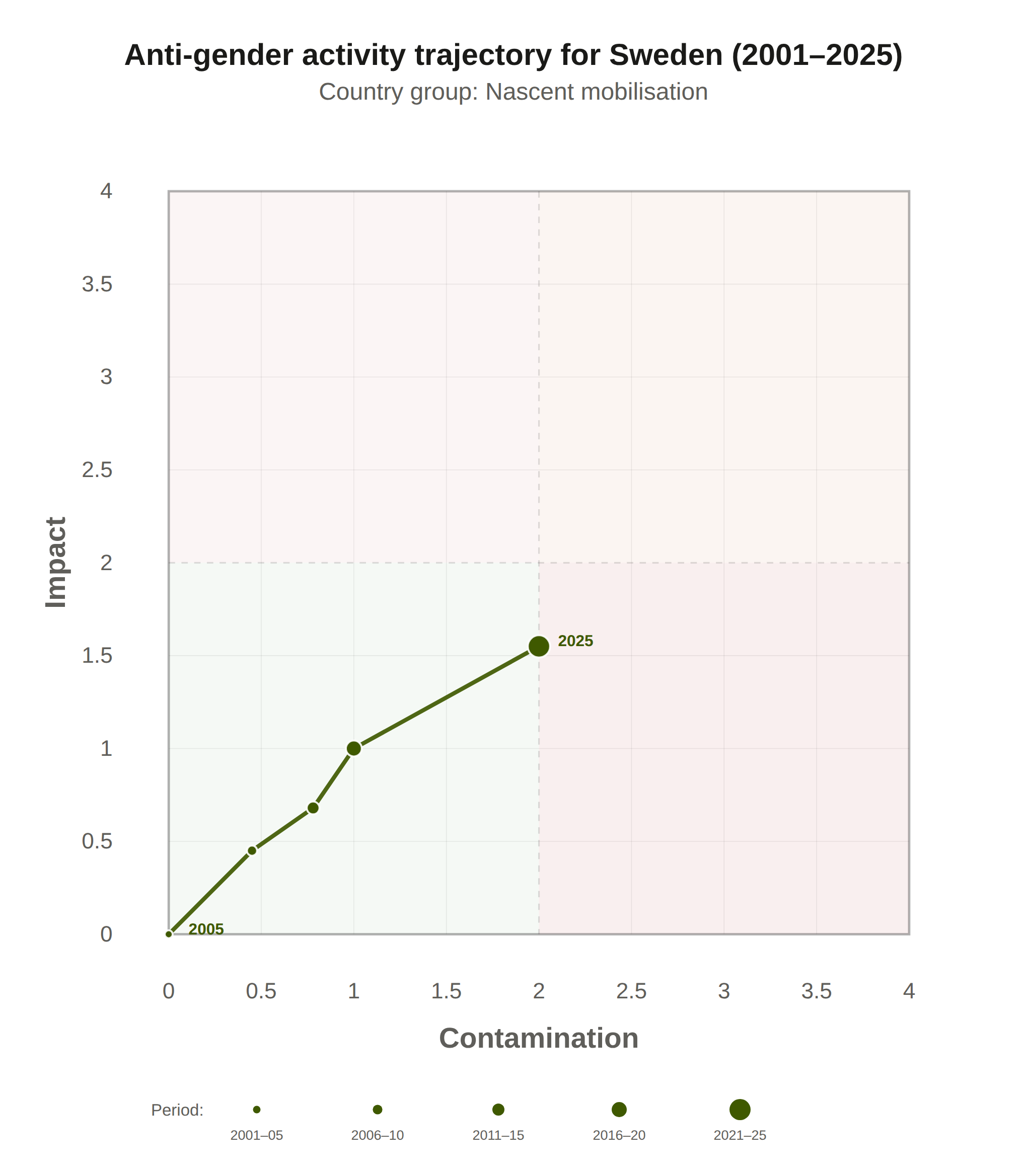
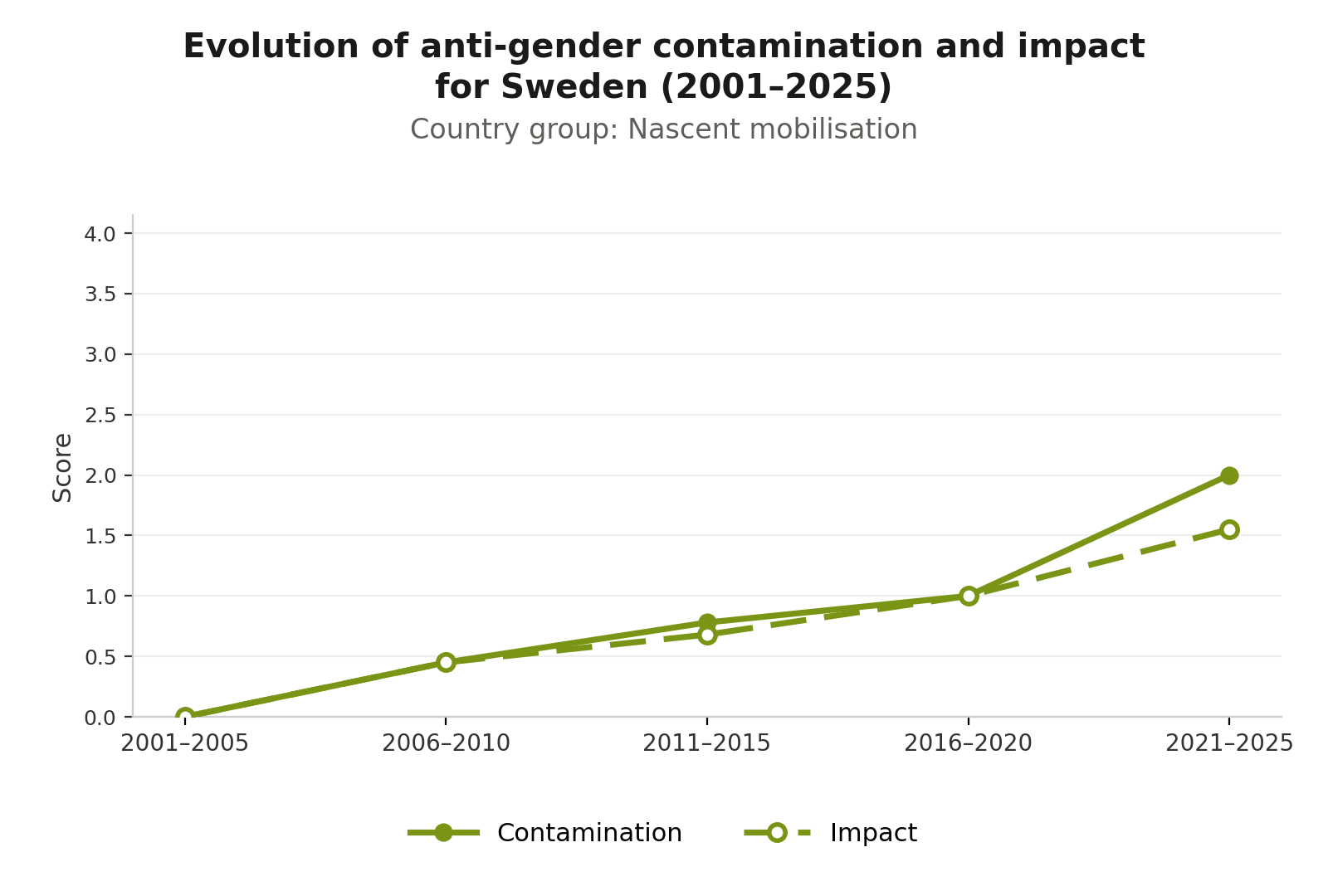
Key indicators in 2025: Contamination 2.00 / 4 · Impact 1.55 / 4
Over the past decades, anti-gender dynamics in Sweden have evolved from episodic religious and conservative opposition to a structurally embedded political phenomenon. In the 2000s, resistance was led by the Christian Democrats, who blocked same-sex adoption rights, opposed same-sex marriage and delayed the removal of the forced sterilisation requirement for legal gender recognition. The Sweden Democrats, entering parliament in 2010 with a femonationalist framing of gender equality as a Swedish national value threatened by immigration, gradually became the primary driver of anti-gender politics. Since the 2022 elections, with the party providing confidence and supply to the governing coalition, this influence has moved from the margins to the centre of policymaking. Alongside this, a so-called “gender critical” feminist strand has emerged, most visibly through Sveriges Kvinnoorganisationer, adding a new and internationally connected dimension to the landscape.
| Year | Abortion & Reproductive Rights |
Sex & Relationship Education |
LGBTIQ+ Visibility |
Partnerships, Marriage & Family |
Legal Gender Recognition & Healthcare |
Istanbul Convention |
Language & Gender Studies |
Civil Society & Democratic Space |
|---|---|---|---|---|---|---|---|---|
| 1990s | O | |||||||
| 2000 | ||||||||
| 2001 | ||||||||
| 2002 | O | |||||||
| 2003 | ||||||||
| 2004 | ||||||||
| 2005 | ||||||||
| 2006 | A | |||||||
| 2007 | ||||||||
| 2008 | ||||||||
| 2009 | O | |||||||
| 2010 | ||||||||
| 2011 | P | |||||||
| 2012 | ||||||||
| 2013 | O | |||||||
| 2014 | LT | |||||||
| 2015 | ||||||||
| 2016 | P | OM | ||||||
| 2017 | PM | A | ||||||
| 2018 | ||||||||
| 2019 | M | P | ||||||
| 2020 | M | |||||||
| 2021 | M | P | ||||||
| 2022 | M | PA | PAT | |||||
| 2023 | M | PAD | ||||||
| 2024 | M | OPIA | ||||||
| 2025 | M | P | P | |||||
| 2026 | O |
| OOpposition to progressive law or regulation/policy | PProposal or implementation of anti-gender law or regulation/policy | LStrategic litigation |
| MProtest or demonstration | IPetition or citizen initiative | AAdvocacy campaign |
| DDisinformation campaign | TTransnational interference |
The evolution of the anti-gender movement in Sweden